
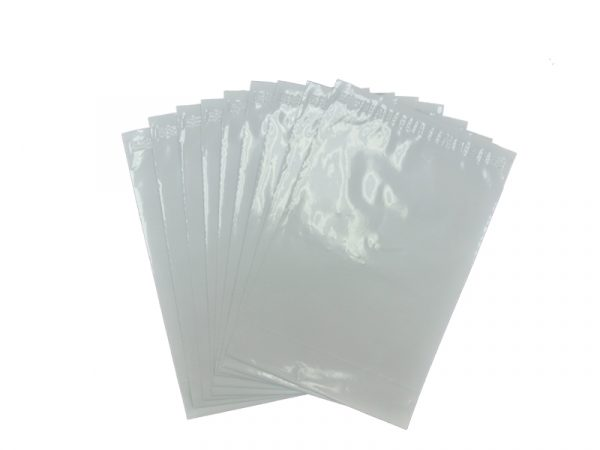
A valid light-exposure test begins with defined conditions: light source, exposure duration, temperature, sample orientation, measurement method, and an acceptable color-change limit. Without those controls, two samples cannot be compared meaningfully, and the result says little about whether the printed or colored surface will remain stable under the chosen exposure.
Evidence for glossy white poly bag mailers bulk becomes meaningful only when the exposure and the color-change limit are defined in advance. Color-stability validation should isolate the variables that affect the exposure result rather than mix them with unrelated packing-performance checks.

For sunlight-exposure testing, artwork approval should define color references, print position, tolerances, plate details, and a consistent method for judging variation. Any unresolved assumptions should be documented for later review.
What Sunlight Can Change in Packaging
Comparable results require the light source, exposure duration, sample orientation, temperature, and measurement method to remain consistent. Realistic testing of sunlight exposure has to reproduce this situation: Each sunlight-exposure result should remain tied to the tested film batch, reference sample, exposure conditions, and color-measurement record.
For glossy white mailers, WH Packing can provide the film and printed-mailer production context, while the buyer defines the exposure protocol used for validation. Comparing lots requires the same reference sample, orientation, duration, and measurement method so that any observed color change can be interpreted on a common basis.
The test plan should document the reference sample, exposure conditions, measurement method, and pass limit before testing begins. Exposure duration and sample orientation should remain unchanged when different batches are compared.
Each result should record the tested batch, reference sample, exposure conditions, measured color change, and acceptance outcome. Color-stability evidence is useful only when it can be traced to the same exposure conditions and reference sample.
Color-stability testing should be limited to variables that directly affect exposure and measurable color change. The relevant controls are the reference sample, exposure conditions, measurement method, acceptance limit, and the specific film or print batch under review. Keeping the test narrow makes the result easier to repeat and easier to explain.
Designing a Useful Exposure Test
Clear sunlight exposure specifications avoid ambiguity by recording this detail: Storage temperature, humidity, sunlight, and ageing can change film, adhesive, and print performance before the mailer reaches a packing bench. Color-stability validation becomes more reliable when the exposure conditions are controlled: A controlled sample is a starting point for validation, not proof that every future batch will behave identically.
Before exposure begins, the test record should state both the method and the pass criterion. A later lot can then be evaluated under the same conditions instead of being judged by a new or loosely described procedure. This is what turns a one-time observation into a repeatable color-stability comparison.
A reference sample should remain available throughout this process so that measured changes can be interpreted against a known starting condition. The test record can identify the film or print batch, exposure source, duration, orientation, temperature, measurement method, and allowable color change used for evaluation. When another production lot is checked later, changing one of these variables would make direct comparison less reliable.
Consistency in the test setup therefore matters as much as the final measurement itself. By linking each result to a defined sample and exposure protocol, buyers can distinguish a reproducible color-stability result from a visual observation made under uncontrolled lighting or handling conditions.
Artwork variation should be controlled before exposure testing because changes in ink coverage or print area can influence the measured color response. Operating limits for sunlight exposure become clearer beside this evidence: Measurements are more persuasive than adjectives.
The test is complete only when the measured color change has been compared with the acceptance limit defined before exposure. Later batches should be screened against the same reference sample and exposure method when color stability forms part of the purchase specification.
Converting Test Results into Purchase Controls
Useful color-stability evidence depends more on repeatable exposure and measurement conditions than on general manufacturing capability.A purchasing decision should rely on results produced under the same exposure source, duration, orientation, temperature, and measurement method.
Technical review should distinguish light-induced color change from abrasion, transfer, heat, or other failure mechanisms outside the exposure test. The manufacturer’s glossy white shipping bags use 100% virgin polyethylene, three-layer extrusion, a white exterior with a black or grey interior.
Validation of sunlight exposure becomes repeatable when this method is fixed: Surface treatment and ink compatibility matter because attractive artwork has little value if the printed surface rubs or transfers during handling.
For repeat purchasing, glossy white poly bag mailers bulk can be linked to the approved film, print reference, exposure method, and allowable color change. Those details provide a practical baseline for evaluating color change in later batches.
Material choices for sunlight exposure are grounded in one practical point: Maintaining a documented production reference allows subsequent lots to be reviewed for changes in material, dimensions, closure, printing, or other approved features. Light-exposure results become purchasing controls only when the test method, reference sample, color measurement, and allowable change are defined.
After testing, WH Packing and the buyer can retain the reference sample together with the exposure result and acceptance limit. Color stability should therefore be described only under the defined exposure conditions and acceptance limits.