
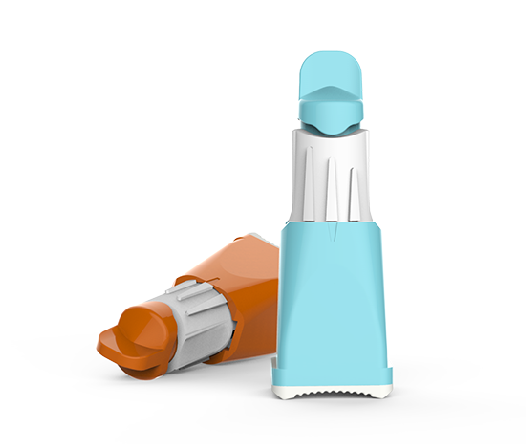
Patient-facing procedures often involve several small actions that must happen in the right sequence, and blood collection is no exception. A device that communicates its activation point clearly can reduce unnecessary adjustments and make fingerstick sampling easier to manage during routine care. Safety lancets push button designs use a tactile trigger rather than requiring pressure across the entire device body, giving users a distinct point of interaction.
Such an arrangement can be particularly useful in busy clinical environments, where attention needs to remain on patient communication, specimen handling, and testing rather than complicated device operation. SteriLance develops capillary blood collection devices across several activation formats, providing a useful context for examining how simple controls can influence the sampling workflow.

Why Activation Simplicity Matters
Fingerstick collection may take only a short time, yet the procedure includes several steps: preparing the site, positioning the device, triggering the puncture, collecting the specimen, and disposing of the used device. Each additional movement can create another opportunity for hesitation or inconsistent handling.
Clear physical controls can make the activation stage easier to understand. Users can identify the intended button by touch or sight, position the device against the selected site, and activate it without searching for a trigger elsewhere on the housing.
Such simplicity also has value during repeated procedures. Healthcare staff may perform numerous fingerstick tests during a shift, so predictable interactions can help maintain a consistent routine without placing unnecessary cognitive demands on each individual collection.
How Button Position Influences Handling
The location of the activation button changes how the hand interacts with the device. Side-mounted controls can be reached with the fingertip while the rest of the hand maintains contact with the housing, whereas other configurations may require different finger positions.
Button size contributes to usability as well. Small controls can be difficult to locate, particularly if the user is wearing gloves or working quickly. Larger tactile surfaces provide a more noticeable interaction point and may reduce the need to reposition the hand.
Safety lancets push button mechanisms also illustrate why activation travel deserves consideration. Shorter movement between the resting and activation positions can make the trigger action feel more direct, although the appropriate design still depends on the device’s intended use and operating instructions.
Matching Depth With Sampling Needs
Puncture depth also affects how readily a suitable sample can be obtained, and the right setting may vary with fingertip skin characteristics. Fixed-depth devices provide one predefined level, while adjustable systems offer several settings for different individuals or testing occasions.
The Disposable Safety Lancet (Flex3 model) illustrates this flexibility with adjustable depths of 1.3 mm, 1.8 mm, and 2.3 mm. This allows users to match the puncture to fingertip skin thickness during blood glucose self-monitoring at home or while traveling.
Keeping the Procedure Patient-Centered
Technical simplicity should support, rather than replace, good patient interaction. Before puncture, healthcare staff may need to explain the procedure, prepare the sampling site, and confirm that the selected finger is suitable. Device handling should fit naturally within that interaction.
Comfort can influence how patients perceive repeated testing. Excessive force, unsuitable puncture depth, or poor positioning may make the experience unnecessarily unpleasant. Thoughtful device selection therefore considers both operational handling and the needs of the person being tested.
Clinical workflow also depends on what happens after activation. Once blood has been obtained, the specimen should be transferred according to the relevant testing procedure, while the used lancet should be disposed of through an appropriate sharps-management process. Clear routines help keep each stage connected.
Supporting Consistency Across Routine Care
Consistency becomes especially valuable in environments where multiple staff members may use similar equipment. Shared familiarity with the activation mechanism can make procedures easier to standardize across different users without adding extensive operational complexity.
Training still has an important role. Staff members should understand the device instructions, appropriate sampling technique, puncture-depth options where available, and disposal requirements. Simple controls do not remove the need for correct procedure.
Good design can nevertheless reduce unnecessary interaction steps. Safety lancets push button systems demonstrate how one clearly defined control may simplify the physical side of fingerstick sampling, allowing greater attention to patient comfort, specimen quality, and the surrounding clinical task.
Conclusion
Patient-centered care is shaped not only by major clinical decisions but also by the small interactions that occur throughout routine procedures. Activation controls, button placement, tactile feedback, and puncture-depth flexibility can influence how naturally blood collection fits into clinical practice. Simpler operation may reduce avoidable handling interruptions while preserving the procedural discipline required for safe sampling.
With experience in capillary blood collection technology and multiple safety-lancet configurations, SteriLance provides an example of how practical device engineering can address the everyday requirements of blood glucose monitoring without adding unnecessary complexity to the patient encounter.
Disclaimer: This content is provided for general health education and informational purposes only. It does not constitute medical advice, diagnosis, or treatment. Individual health conditions vary, and no health education article can replace a face-to-face consultation with a qualified healthcare professional or licensed medical institution. If you have specific health concerns or feel unwell, please seek care from a licensed medical facility and do not delay treatment because of content on this platform.