
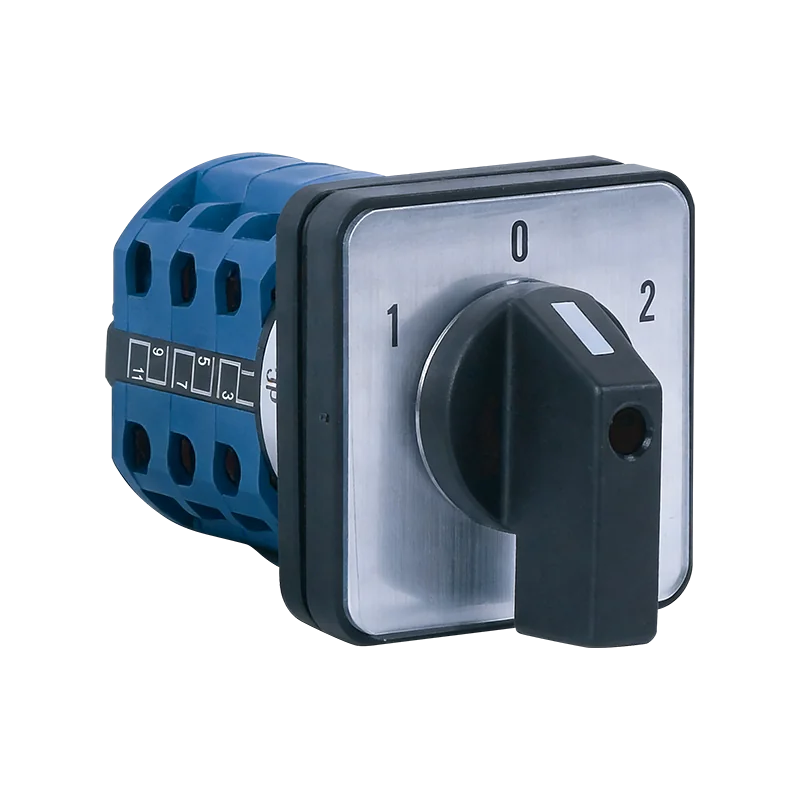
Electrical maintenance often requires more than simply turning equipment off. Before inspection, repair, replacement, or servicing begins, the relevant circuit must be safely isolated from its power source. A properly selected disconnect switch provides a clear means of separation and helps maintenance personnel work under controlled electrical conditions.
For facilities, control panels, machinery, and distribution systems, choosing the right electrical control products involves considering not only electrical ratings but also operating requirements, installation conditions, and maintenance procedures. Understanding how disconnect switches work and how different configurations support isolation can help create electrical systems that are easier to operate and maintain.

The Role of Disconnect Switches in Electrical Maintenance
A disconnect switch is designed to provide a means of isolating electrical equipment or a circuit from its power supply. During maintenance, isolation helps prevent equipment from being unintentionally energized while work is being performed.
Unlike a protective device that primarily responds to electrical faults, a disconnect switch serves an important operational function. It allows authorized personnel to establish a visible and deliberate separation between the equipment and its power source.
This distinction is important when designing electrical systems. Circuit protection and isolation often work together, but they address different requirements. A complete electrical installation may therefore include circuit breakers for protection and disconnect switches for isolation.
Selecting the Right Switch for the Application
Electrical installations vary considerably in voltage, current, load type, operating frequency, and environmental conditions. These factors should be evaluated before selecting a disconnect switch.
The rated voltage and current should be appropriate for the connected circuit. The switch should also be suitable for the intended installation environment and provide an operating configuration that matches the maintenance and control requirements of the equipment.
A rotary switch can be particularly useful where straightforward manual operation and clear position selection are required. Depending on the circuit and application, different configurations may be available. An industrial rotary switch can be used in control panels and industrial equipment where reliable manual switching is required.
The number of positions is another consideration. A 3-position rotary switch may be used when an application requires three defined operating states, while a 4-position rotary switch can provide four selectable positions for more complex control arrangements. For simpler circuits, a single-pole rotary switch may be appropriate when only one circuit needs to be switched.
These configurations should not be selected simply according to the number of positions. The electrical diagram, connected load, switching requirements, and installation method should all be considered before making a final selection.
Why Clear Isolation Supports Safer Maintenance
Electrical maintenance can involve multiple people, circuits, and pieces of equipment. A clear isolation method helps reduce confusion about whether a particular circuit remains connected to its power source.
The physical location of the disconnect device also matters. It should be positioned where authorized personnel can operate it appropriately and where its relationship to the equipment is easy to understand. Clear labeling and consistent control-panel design can further improve operational clarity.
For machinery and industrial installations, disconnect switches may be integrated into control cabinets or positioned near equipment. The exact arrangement depends on the system design and applicable electrical requirements.
It is also important to remember that switching off a device does not automatically make an electrical system safe for maintenance. Appropriate procedures for isolation, verification of de-energization, and lockout or other site-specific safety practices should be followed by qualified personnel according to applicable regulations and workplace procedures.
Integrating Disconnect Switches With Other Electrical Control Products
Disconnect switches are usually one part of a larger electrical system. They may operate alongside MCBs, MCCBs, contactors, overload protection, distribution equipment, and other low voltage products.
For example, a motor control circuit may require overcurrent protection, switching control, overload protection, and a dedicated means of isolation. Each component performs a different function, and their electrical ratings and characteristics should be coordinated.
This is particularly relevant when selecting industrial electrical products for machinery, production equipment, control panels, and distribution systems. A well-planned combination of protection and switching devices can simplify operation while supporting maintenance requirements.
Product compatibility is also worth considering. Using equipment from a consistent product range can make technical documentation, panel design, installation, and replacement more straightforward.
What to Consider When Working With Switchgear Manufacturers
When evaluating switchgear suppliers, product specifications should be considered together with technical documentation, application requirements, and after-sales communication. Experienced low voltage switchgear manufacturers and electrical switchgear manufacturers can provide product information that helps engineers and installers evaluate whether a particular device fits the intended application.
Questions about rated current, voltage, number of poles, switching positions, installation dimensions, and applicable standards should be clarified before procurement. This is especially important when a project involves multiple control circuits or requires specific panel configurations.
MAXGE provides a range of electrical protection, switching, distribution, and control products for different low voltage applications. Reviewing the available product range can help project teams identify suitable components according to their system requirements.
Plan Isolation Into the Electrical System From the Start
Safe isolation should be considered during the design stage rather than added only after equipment has been installed. The location, switching method, electrical rating, installation environment, and relationship between disconnect devices and protective equipment can all influence the usability of the final system. In larger installations, the isolation strategy should also be considered alongside circuit distribution, maintenance access, and the operating procedures used by maintenance personnel.
For applications that require electrical control products, selecting the appropriate disconnect switch is part of creating an electrical system that supports safe operation and practical maintenance. From local isolation at individual equipment to isolation within broader distribution systems, the required solution depends on circuit characteristics, system voltage, load conditions, and the intended maintenance process. MAXGE develops low-voltage electrical solutions covering protection, switching, distribution, and control, with applications extending to industrial systems, PV, energy storage, and EV charging.
By considering isolation alongside protection and control, engineers can develop electrical systems in which different devices work together according to the needs of the application. MAXGE’s broader low-voltage product portfolio provides options for different electrical configurations, allowing isolation requirements to be considered as part of the overall system rather than as a standalone function.
If you need product information or want to discuss your application requirements, you can contact MAXGE through its official website. Reviewing the electrical requirements before selection can help identify a suitable product configuration for the intended system and installation conditions.
A well-planned isolation strategy gives maintenance personnel a clear way to separate equipment from its power source while fitting naturally into the wider protection and control system. By addressing isolation during the initial design process, electrical installations can be developed with clearer maintenance requirements and more practical operating arrangements.