
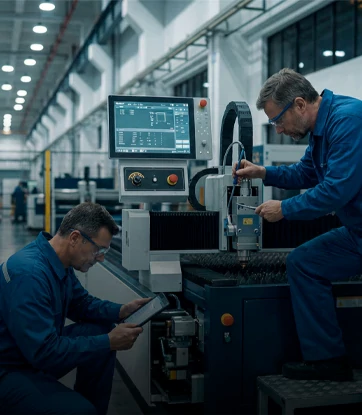
Production schedules can be disrupted by a component that costs far less than the hours lost while waiting for its replacement. Spare-parts planning is not simply a matter of filling shelves; it requires an understanding of machine configuration, component wear, supplier availability, and the consequences of a failure.
Well-organized fiber laser cutting machine spare parts management helps manufacturers respond to interruptions without tying up excessive capital in rarely used inventory. Hymson Laser Machinery emphasizes faster production startup and efficient equipment operation, objectives that also depend on practical preparation for routine wear and unexpected faults.

Identifying Critical Parts and Their Impact
Not every replacement component deserves the same inventory priority. Consumables such as cutting nozzles and protective windows may need frequent replacement, while sensors, cables, filters, and selected motion-system components can become critical when a failure stops production. The right stock level depends on usage frequency, expected service life, procurement lead time, and the effect of a component failure on scheduled work. Classifying parts by operational risk helps purchasing teams focus resources where shortages would cause the greatest disruption.
The cutting process itself provides useful evidence for deciding what to stock. Frequent nozzle changes may indicate intensive production or inconsistent consumable life, while repeated filter replacements could reflect workshop conditions or maintenance practices. Historical usage should be reviewed alongside machine hours, material types, and fault records rather than interpreted as a simple monthly average. This analysis helps distinguish predictable consumption from unusual demand caused by a developing equipment problem.
Criticality also depends on whether a substitute is available. A common consumable may be sourced quickly, whereas a configuration-specific sensor or control component could require a longer delivery period. Manufacturers should identify which parts can stop all production, which only affect selected jobs, and which can be replaced during planned downtime. A prioritized inventory of fiber laser cutting machine spare parts can then reflect actual production exposure instead of treating every item as equally urgent.
Verifying Compatibility Before Ordering
Visual similarity does not establish that two components are interchangeable. Cutting heads, optical assemblies, sensors, connectors, and control components may differ by machine configuration, revision, interface, or technical specification. Purchasing staff should confirm the machine model, serial number, part number, and any relevant revision information before placing an order. Manufacturer documentation and authorized technical guidance are safer references than assumptions based on appearance or an incomplete product description.
Optical and cutting-head components require particular care. Protective windows, lenses, and related parts may have specific dimensions, coatings, cleanliness requirements, or installation procedures. Using an unsuitable component can affect cutting quality or introduce risks to the optical system. Storage conditions matter as well: dust, moisture, and careless handling may damage sensitive parts before they ever reach the machine. Packaging should remain intact until installation, following the supplier’s handling instructions.
Compatibility checks should extend to the records used by purchasing and maintenance teams. Each stocked item can be linked to the equipment it supports, approved suppliers, replacement instructions, and any known restrictions. Clear records reduce duplicate purchasing and help prevent obsolete parts from remaining in circulation after a machine configuration changes. Reliable laser cutting machine maintenance depends partly on this information because technicians need to know which components are approved for each system and how replacement work should be performed.
Building a Practical Replenishment System
Inventory decisions become more useful when they are tied to actual consumption and delivery times. A reorder point can account for average usage during the supplier’s lead time, with additional stock added when demand is variable or a shortage would cause substantial downtime. High-value components with low failure frequency may require a different strategy from inexpensive consumables used every shift. Reviewing these categories separately helps manufacturers balance operational resilience against storage costs and working-capital limits.
A simple inventory record should capture stock on hand, reserved quantities, recent usage, supplier lead time, reorder threshold, and the date of the last review. Regular cycle counts can reveal discrepancies between recorded and physical inventory before a critical part is needed. Teams should also define who can authorize emergency purchases and how replacement parts are logged after installation. This process makes fiber laser cutting machine spare parts planning easier to maintain even when purchasing, warehouse, and technical responsibilities sit with different departments.
Preventive maintenance records provide another input for replenishment decisions. If inspections show that particular consumables are wearing faster than expected, the team can investigate operating conditions and adjust stock levels where justified. Conversely, repeated purchases of a component that remains unused may signal an excessive reorder quantity or an outdated equipment record. A disciplined laser cutting machine maintenance program connects these findings with inspection schedules, component replacement history, and production downtime, allowing inventory policies to improve as more evidence becomes available.
Conclusion
Production continuity depends on matching spare-parts availability to the machine’s real operating risks. Criticality assessments help prioritize stock, compatibility checks reduce ordering mistakes, and replenishment rules make shortages easier to anticipate.
Hymson Laser Machinery promotes efficient production startup and stable equipment operation; manufacturers can support those goals through clear inventory ownership, accurate part records, and maintenance data that informs purchasing decisions. Well-planned fiber laser cutting machine spare parts inventory turns emergency replacement into a more controlled operational process, helping teams protect production schedules without accumulating unnecessary stock.