
Table of Contents
The transition to electrification has fundamentally altered vehicle architecture, making automotive injection molding a cornerstone of modern EV design. As manufacturers strive to extend battery range and reduce assembly complexity, the plastic injection molding automotive industry is replacing traditional heavy metal fabrications with integrated, lightweight polymer solutions. By utilizing advanced engineering resins and automotive rubber injection molding techniques, engineers can now achieve significant weight reductions while maintaining structural integrity in critical areas like the E-Trunk and chassis systems.
Transforming Structural Assemblies via Automotive Injection Molding
The migration from multi-piece steel assemblies to consolidated plastic structures represents a paradigm shift in vehicle manufacturing. Advanced molding techniques now allow for the creation of complex, large-format components that reduce vehicle mass and streamline production lines.
Consolidating Metal into Single-Shot E-Trunks
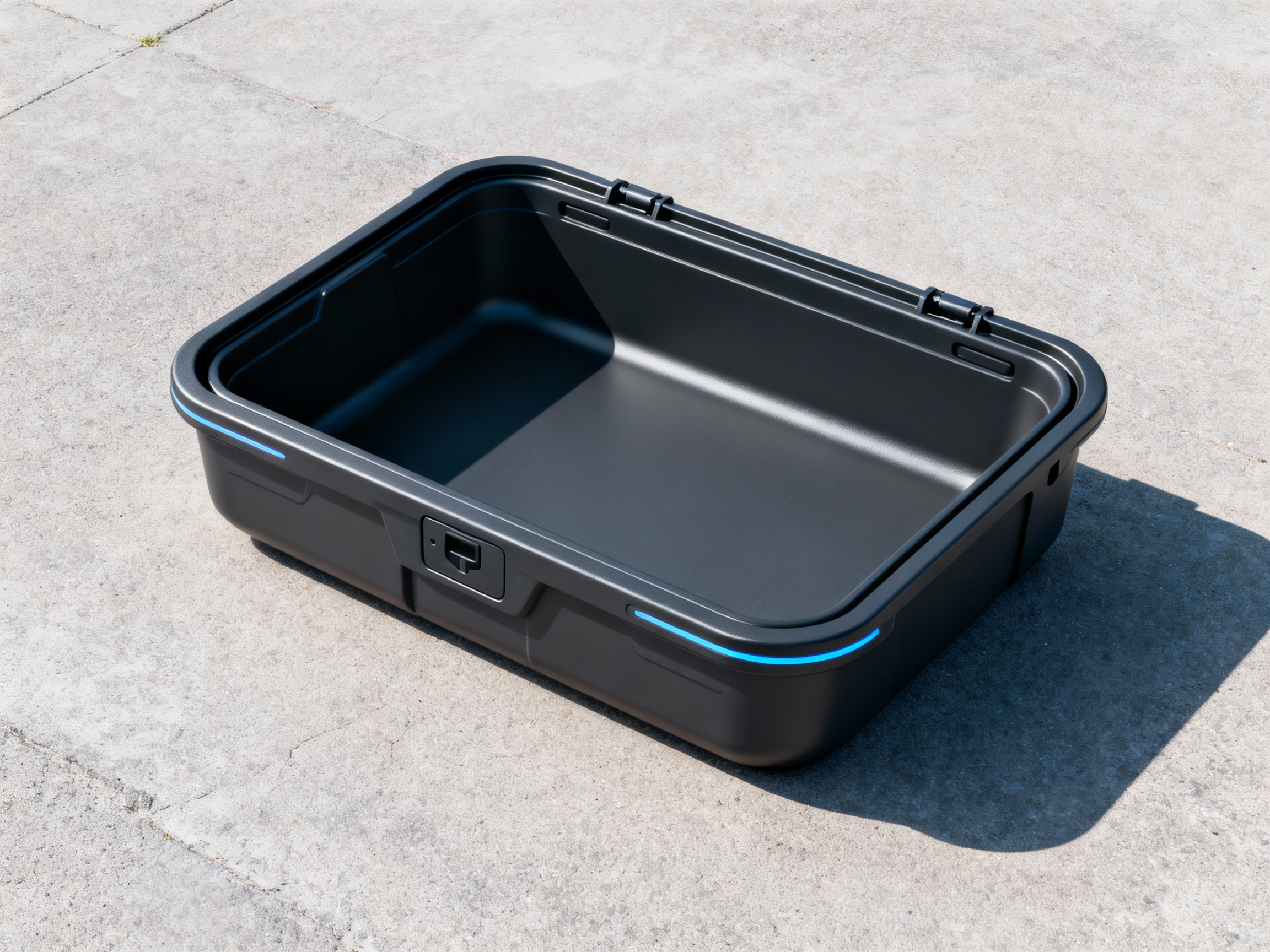
The electric vehicle tailgate, or E-Trunk, is a prime candidate for metal-to-plastic conversion. Traditional steel tailgates often require stamping and welding over 20 individual parts, contributing significantly to vehicle weight. By leveraging large-tonnage automotive injection molding, manufacturers can produce a “single-shot” structural panel that integrates the outer skin, inner lining, and mounting points. Industry data indicates that composite plastic tailgates can achieve weight reductions of 30% to 48% compared to their steel counterparts. This mass reduction is critical for EVs, where every kilogram saved directly correlates to extended range. Furthermore, eliminating welding processes reduces assembly cycle times, improving overall manufacturing throughput.
Aerodynamics and Storage Optimization
Beyond weight savings, injection molding offers unparalleled design freedom. Engineers can design seamless, aerodynamic contours that are impossible to stamp in metal, effectively lowering the vehicle’s drag coefficient. Internally, the process allows for thin-wall structural ribbing that maximizes stiffness without adding bulk. This capability is essential for expanding cargo volume in E-Trunks, providing deeper storage compartments that utilize space previously occupied by thick metal reinforcements.

Enhancing Performance with the Plastic Injection Molding Automotive Industry
Achieving the silence and efficiency expected of electric vehicles requires materials that outperform metal in friction management and vibration damping. High-performance polymers are now central to chassis dynamics and cabin comfort.
Chassis Lightweighting with High-Performance Polymers
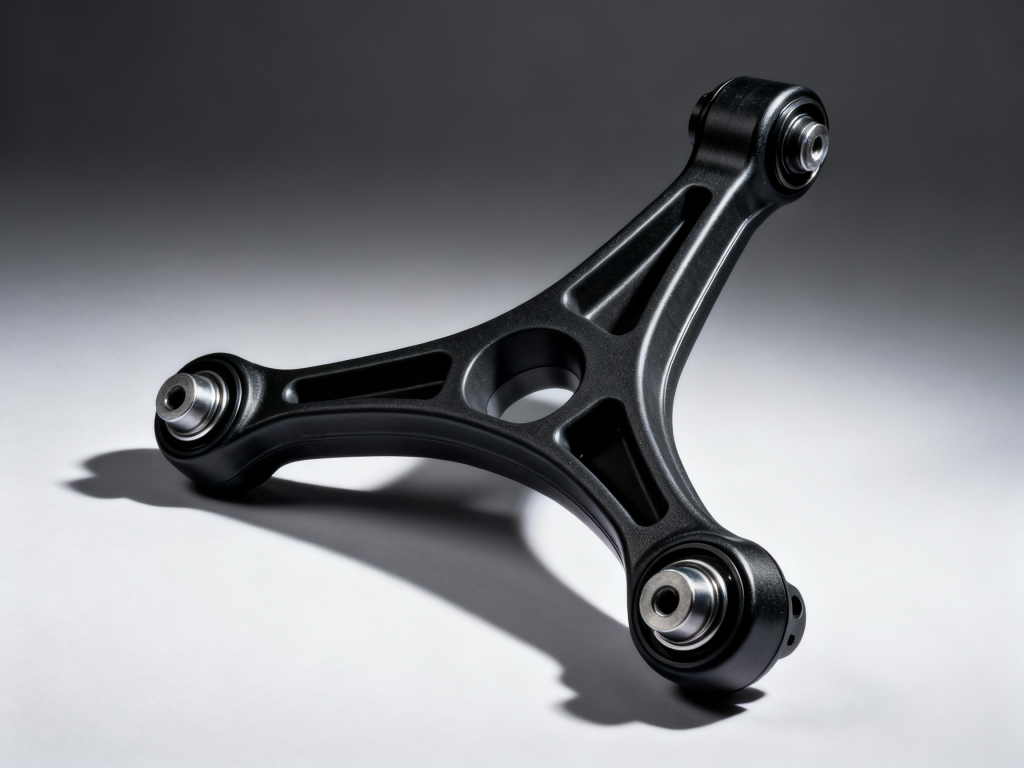
The automotive injection molding services sector is increasingly processing high-performance thermoplastics like Carbon Fiber Reinforced PEEK to replace metal chassis components. For instance, replacing steel control arms with PEEK composites can reduce unsprung mass, which improves handling and suspension response. PEEK boasts a specific strength (tensile strength-to-density ratio) nearly 20 times that of steel and 8 times that of aluminum. These polymer components not only withstand high mechanical stress but also offer superior corrosion resistance, eliminating the need for protective coatings required by metal parts.
NVH Mitigation in Silent Cabins
Without the masking noise of an internal combustion engine, NVH (Noise, Vibration, Harshness) becomes a critical focus in EVs. Precision automotive injection mold technologies enable the production of PEEK gears for seat adjusters and electronic parking brakes, which operate more quietly than metal alternatives. Additionally, automotive rubber injection molding is utilized to create dampening elastomers and seals. These multi-material solutions, often achieved through 2K (two-shot) molding, bond soft TPE seals directly onto rigid substrates to eliminate rattles and squeaks, ensuring the cabin remains a sanctuary of silence.
Premium Automotive Tooling and Molding Solutions
Livepoint Tooling stands as a strategic partner for the automotive sector, delivering comprehensive “design-to-mass-production” capabilities. With over 23 years of expertise and ISO 9001 certification , Livepoint specializes in high-precision automotive injection molding and mold fabrication. Their vertical integration covers everything from rapid prototyping with CNC and soft tooling to high-volume production of complex EV components.
Whether the project requires flame-retardant battery housings, intricate connectors, or automotive rubber injection molding for weather-tight seals, Livepoint ensures dimensional accuracy and repeatability. Their facility is equipped to handle the demands of the plastic injection molding automotive industry, offering advanced solutions like 2K molding and insert molding for busbars. By utilizing automated vision systems and rigorous defect prevention protocols, Livepoint guarantees tight tolerances for global automotive brands.
For engineers seeking reliable, high-quality tooling and molding services that accelerate time-to-market, Livepoint Tooling offers the expertise to turn complex EV concepts into road-ready reality.