
Operating marine climate equipment in open-water environments across North America, Europe, and the Middle East subjects hardware to severe environmental strain. Unlike land-based air handling units, marine HVAC systems function in continuous proximity to aggressive saltwater spray, high humidity, constant hull vibration, and direct solar thermal radiation. As the maritime industry transitions toward modern energy architectures—shifting from traditional AC generators toward DC battery banks, lithium energy storage, and solar installations—maintaining reliable cabin cooling requires a thorough understanding of system mechanics and routine care.
Understanding how critical components operate under thermal and mechanical stress enables vessel operators, marine technicians, and equipment distributors to optimize climate performance across diverse operating conditions. In region-specific deployments across warm Mediterranean bays, American coastal waters, or Middle Eastern gulfs, maintaining reliable cooling during peak operating periods is important for passenger comfort and commercial vessel productivity. Proper oversight helps reduce the risk of unexpected system shutdowns during peak cruising seasons, protect sensitive onboard electronics from moisture accumulation, and reduce unnecessary equipment stress and support longer service life.
Primary Structural Components in Modern Boat Air Conditioning Systems

To maintain stable cabin temperatures and effective humidity control, boat air conditioning systems rely on several interconnected mechanical and electrical assemblies working in harmony. Each component must withstand aggressive saltwater corrosion and mechanical shock within cramped machinery spaces beneath decks.
The raw water cooling circuit serves as the primary heat sink for self-contained marine air conditioning units. Raw seawater is drawn through an intake seacock, passes through a raw water strainer, and is circulated by a dedicated pump through the heat exchanger to dissipate thermal energy. In high-performance marine systems, traditional cupronickel heat exchangers are replaced with full-titanium alloy coaxial condensers. Titanium can provide strong resistance to chloride-related corrosion and pitting, making it suitable for marine heat-exchange applications even in warm, high-salinity waters.
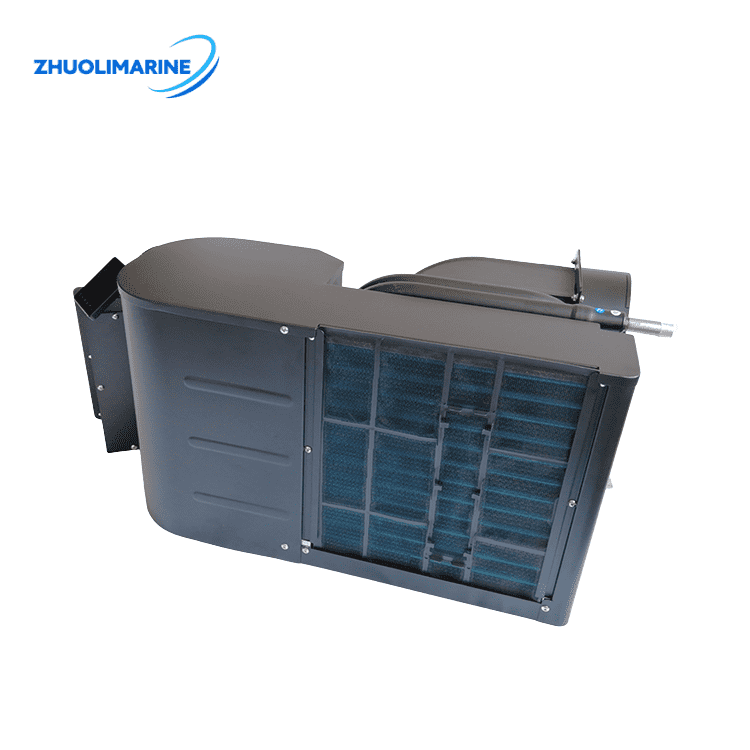
The refrigeration and air distribution circuit includes the compressor, evaporator coil, expansion device, and centrifugal air blower. The compressor pressurizes refrigerant gas, which absorbs heat from interior cabin air passing across the evaporator coil. The air blower then distributes cooled, dehumidified air through cabin ducting. To prevent structural damage from standing condensate, a heavy-duty 304 stainless steel chassis with an integrated stainless steel drain pan collects moisture stripped from the air, channeling it safely into bilge discharge lines.
Electrical control architecture and variable-frequency inverter modules manage system activation and motor speeds. Modern units incorporate soft-start logic that gradually ramps compressor speed upon activation, helping reduce the high inrush starting current associated with conventional fixed-speed compressors. Sealed control enclosures with high IP ratings safeguard sensitive circuit boards against ambient humidity and salt spray.
Essential Routine Maintenance Procedures for Reliable Operation
Regular maintenance helps maintain cooling performance and reduce unnecessary mechanical stress of marine HVAC equipment. Neglecting basic service protocols often leads to elevated system pressures, diminished thermal pulldown, higher electrical consumption, and potential compressor failure.
First, technicians and boaters must regularly inspect the raw water cooling circuit. The intake strainer basket should be cleared of marine growth, seaweed, and debris to maintain unrestricted water flow. Periodically flushing the titanium coaxial condenser with a mild descaling solution prevents mineral scaling and bio-fouling buildup inside the seawater tubing. Inspecting seawater pump impellers and flexible hose connections ensures steady water discharge during operation. Routine inspection of seawater strainers and pumps can help reduce the risk of thermal overload during peak summer operation.
Second, maintaining clean airflow pathways is critical for effective heat exchange. Return air filters should be cleaned or replaced regularly to prevent dust accumulation on evaporator fins. Restricted airflow starves the evaporator coil, leading to coil icing, elevated humidity levels, and excess strain on the blower motor. Inspecting condensate drain pans and clearing discharge outlets ensures standing water flows freely, preventing mold growth and cabin leakage.
Third, electrical diagnostics should be conducted prior to peak operational periods. Service personnel should inspect wiring harnesses, verify terminal connection tightness, check voltage stability under load, and evaluate capacitor health. Regular inspection minimizes electrical resistance drops and protects control electronics during extended offshore passages.
Featured Engineering Solution: Integrated Inverter Boat Air Conditioners
For equipment distributors, boat builders, and commercial outfitters seeking high-reliability climate control platforms, integrated inverter boat air conditioning systems provide flexible installation and operating options for different vessel layouts. Ranging in cooling capacity from 9,000 BTU to 25,000 BTU, these self-contained heating and cooling units feature a remarkably compact physical footprint designed for installation into tight bilge compartments, seating lockers, or under-berth cabinets.
Built around full-range variable-frequency inverter technology, these units support both AC 110V/220V power supplies and native DC 12V/24V/48V multi-voltage battery architectures. By reducing starting current demand through inverter and soft-start operation, these systems can support battery-based air conditioning configurations, including vessels using lithium battery banks. Depending on the vessel’s power architecture, this can also reduce reliance on generator operation during overnight anchorages.
Each unit incorporates a full-titanium alloy coaxial tube condenser, a heavy-duty 304 stainless steel chassis with an integrated stainless drain pan, an IPX4 rating for the unit, along with specified protection for the motor and electrical components, low-noise operation, and intelligent Wi-Fi mobile app connectivity for real-time remote parameter monitoring, group control, and diagnostic reporting. Backed by a 1-year factory warranty and dedicated technical support, these units are designed to support reliable operation while helping distributors and vessel operators manage routine maintenance requirements.
Partnering with ZhuoliMarine for Advanced Marine Climate Solutions
As a specialized manufacturer of marine HVAC equipment, ZhuoliMarine supplies inverter climate systems for small-to-medium vessels, yachts, commercial craft, and marine equipment distributors. Its solutions offer multiple voltage configurations and corrosion-resistant construction for different onboard installation requirements. Contact the ZhuoliMarine technical sales team to discuss suitable marine air conditioning solutions for your vessel project.