
Vehicle development requires continuous testing, refinement, and performance evaluation long before full-scale production begins. From interior components to structural assemblies, manufacturers depend on accurate prototypes to verify designs and reduce engineering risks during development. As automotive technologies evolve more rapidly, efficient automotive prototyping has become an essential part of shortening production cycles and improving product reliability.
Prototype manufacturing allows engineers to evaluate form, fit, and functionality under real operating conditions. Early-stage validation helps identify design weaknesses before tooling investments and mass production commitments are made.
Faster Evaluation of Design Concepts
Automotive development often involves multiple rounds of design adjustments. Components must meet strict requirements related to durability, weight reduction, thermal performance, and assembly compatibility. Through effective automotive prototyping, development teams can test these factors earlier and make technical improvements before final production approval.

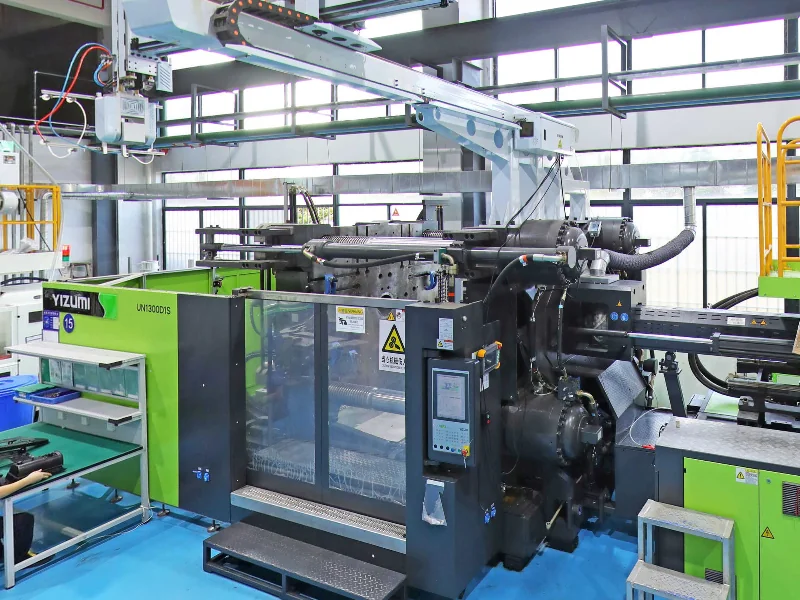
Prototype parts are commonly produced using CNC machining, vacuum casting, injection molding, and 3D printing depending on the application. This flexibility allows engineers to compare materials, evaluate tolerances, and confirm functional performance within compressed development timelines.
Manufacturers serving the automotive sector increasingly rely on integrated production support to simplify communication between engineering and manufacturing teams during prototype development.
Improving Accuracy Before Mass Production
Errors discovered during large-scale production can lead to expensive redesigns and manufacturing delays. Prototype validation helps reduce these risks by confirming dimensional accuracy and assembly performance in advance.
Detailed testing also supports compliance with industry quality standards, particularly for components exposed to mechanical stress, temperature variation, or repeated use. Accurate prototyping improves confidence before transitioning into production tooling and high-volume manufacturing.
The automotive manufacturing capabilities presented by APT-Mold include support for precision machining, rapid tooling, plastic injection molding, and low-volume production solutions tailored to automotive applications.
Supporting More Agile Vehicle Development
As vehicle platforms become increasingly complex, manufacturers need development processes that can adapt quickly to engineering changes and market demands. Flexible prototyping solutions help shorten development cycles while maintaining quality and production readiness.
By combining multiple manufacturing technologies within one workflow, companies such as APT-Mold can assist automotive manufacturers in moving more efficiently from prototype evaluation to scalable production. In modern vehicle development, automotive prototyping continues to play a critical role in improving speed, precision, and overall manufacturing efficiency.