
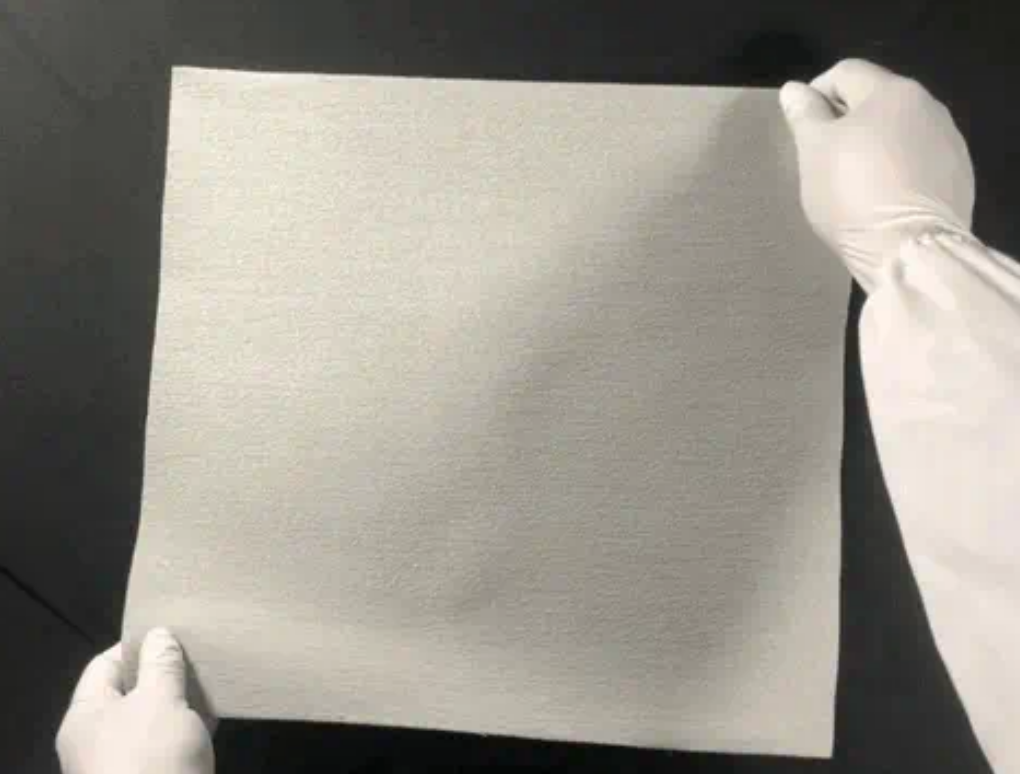
Material selection has become increasingly important for manufacturers developing winter apparel, footwear, and other products where thermal performance must be balanced with weight, flexibility, and construction space. When comparing low thermal conductivity insulation technologies, they need to look beyond a single thermal value and examine how each material manages heat transfer, moisture, thickness, and product integration. Y-Warm and PrimaLoft represent two different approaches to synthetic insulation, making their structural characteristics particularly relevant to product designers and sourcing teams.
Different Insulation Structures Create Different Design Approaches

They can first distinguish the two materials by examining how their insulation structures are designed. PrimaLoft has developed a broad portfolio of synthetic insulation technologies based largely on ultra-fine fibers designed to trap warmth while providing softness, light weight, and water resistance. Its portfolio includes conventional insulation products, active insulation fabrics, and loose-fill technologies.
Y-Warm approaches low thermal conductivity insulation from a different structural direction. According to its principle page, Y-Warm uses polymer flexible nano-scale closed-cell technology. Its internal morphology contains nano-scale pore walls and separated pores at the micrometer scale, creating a honeycomb-like structure intended to restrict heat transfer.
This difference matters to manufacturers because insulation efficiency is not determined solely by the polymer itself. The physical arrangement of the material influences thickness, heat-flow pathways, flexibility, and how easily the insulation can be incorporated into a finished product.
How Y-Warm Uses Closed-Cell Pore Architecture
They can understand Y-Warm more clearly by looking at its pore structure rather than treating it as conventional textile fill. The published nano-CT and SEM information describes solid polymer walls surrounding isolated pore spaces, with the structure designed to limit thermal transfer through the material.
The Y-Warm principle page explains that closed-cell structures generally provide stronger insulation characteristics than open-cell structures, while smaller pores and thinner cell walls can increase resistance to heat transfer. This gives Y-Warm a physical-insulation mechanism that differs from insulation systems primarily dependent on loft and trapped air.
For manufacturers, the distinction is practical. A material based on a fine closed-cell architecture can be considered when product development teams need thermal resistance without relying entirely on a thick, lofty insulation layer.
PrimaLoft Relies on Fine-Fiber Insulation Technology
They should also recognize that PrimaLoft is not a single material construction. The brand offers multiple insulation technologies designed for different end uses and performance requirements. Its official technology information describes ultra-fine fibers that trap warmth, with product families addressing lightweight warmth, moisture management, stretch, footwear, and loose-fill applications.
This broad portfolio gives manufacturers considerable flexibility. For example, PrimaLoft Active technologies are designed around breathability, moisture management, and stretch, while ThermoPlume is a loose-fill synthetic insulation designed to reproduce characteristics associated with down.
Therefore, a direct Y-Warm-versus-PrimaLoft comparison should not assume that every PrimaLoft product behaves identically. Product teams should compare Y-Warm with the specific PrimaLoft technology being considered for the application.
Thickness Becomes an Important Product-Development Variable
They also need to evaluate insulation thickness because conventional textile warmth measurements are often closely connected with loft and material thickness. Y-Warm’s principle page specifically notes that conventional CLO and RCT methods are not well suited to its ultra-thin structure because those methods are designed around the thermal behavior of fluffy materials.
This creates an important distinction for product engineers. PrimaLoft products can use lofted fiber structures to create thermal protection, whereas Y-Warm is designed as an ultra-thin physical insulation layer.
Consequently, the most appropriate comparison should consider the finished construction rather than simply comparing nominal material specifications. Garment patterning, shell fabrics, lining, stitching, compression, and installation method can all affect the final thermal result.
Moisture Management Changes the Material Selection Equation
They should not evaluate thermal insulation separately from moisture behavior. PrimaLoft states that its insulation technologies use water-resistant fibers and that certain products are specifically designed to manage moisture and maintain comfort during activity.
Y-Warm takes another approach by incorporating hydrophilic functional groups into its polymer structure. Its principle information states that the material combines thermal insulation with moisture permeability and fast-drying performance. The page also describes an integrated antibacterial function designed to remain effective after repeated washing.
For apparel and footwear manufacturers, this can make moisture behavior an important part of the sourcing decision. They can assess whether the product requires loft-based insulation, a thin barrier layer, moisture transport, or a combination of these functions.
Compression and Construction Should Be Evaluated Carefully
They also need to consider how the insulation behaves after being incorporated into a finished product. Y-Warm is described as a flexible insulating layer with wrinkle recovery, limited stretch in the warp and weft directions, and the option of bias cutting when additional directional flexibility is required.
Its installation guidance also matters. The manufacturer recommends avoiding hot pressing because excessive heat and pressure can prevent the porous structure from recovering, while overly dense quilting can negatively affect hand feel. For laminated products, full-coverage adhesive application may also reduce permeability.
PrimaLoft, by contrast, offers multiple constructions, including fiber-based insulation and specialized fabrics. Some PrimaLoft Active technologies are specifically designed with stretch and breathability in mind, allowing designers to select a construction according to garment movement and activity requirements.
Where Each Technology Can Fit Product Requirements
They can therefore view the comparison as a question of design priorities rather than simply asking which insulation is universally better. PrimaLoft can be appropriate where established synthetic fiber structures, loft, softness, water resistance, or specialized active constructions are central to the product brief.
Y-Warm can be considered when manufacturers are pursuing an ultra-thin insulation architecture based on physical isolation. The principle page identifies applications including winter jackets, shoes, and other cold-weather products, while the broader Y-Warm application information also covers outdoor products and other thermal-insulation applications.
This distinction can be particularly relevant when designers face strict space limitations. Instead of increasing insulation volume to obtain additional thermal resistance, they can investigate whether a thin structural insulation layer better fits the construction requirements.
A More Rigorous Way to Compare Insulation Materials
They should establish application-specific criteria before choosing between Y-Warm and PrimaLoft. Thermal performance should be evaluated together with thickness, weight, moisture management, compression, flexibility, sewing or lamination requirements, washing conditions, and the architecture of the finished product.
They should also avoid comparing published figures from different test methods as though they were directly interchangeable. Y-Warm explicitly states that its ultra-thin and rough structure makes absolute thermal conductivity difficult to measure precisely using standard methods, with results varying according to the measurement approach.
For procurement teams, this means requesting comparable material data and assessing the complete product construction. Such an approach produces a more reliable technical decision than selecting an insulation solely from a headline conductivity or warmth claim.
Why Y-Warm Represents a Distinct Alternative
They can regard Y-Warm as a distinct option within the synthetic insulation market because its development centers on flexible nano-scale closed-cell technology rather than conventional lofty fiber insulation. The company states that its technology was developed to address the mechanical limitations associated with nanoporous materials while combining thermal insulation, moisture permeability, and quick drying.
They also provide guidance for apparel construction, washing, storage, and material handling, allowing manufacturers to consider the material from both a technical and production perspective. Its principle page describes machine washing with cold water and low-temperature drying, while also emphasizing protection of the porous structure during processing.
For businesses developing thinner winter products, footwear, or specialized thermal layers, these characteristics provide a basis for further material evaluation.
Selecting the Right Insulation Architecture
The comparison between Y-Warm and PrimaLoft ultimately shows that insulation selection is a system-level decision. PrimaLoft provides a mature family of synthetic fiber and specialized insulation technologies, while Y-Warm focuses on an ultra-thin closed-cell structure designed to restrict heat transfer through physical isolation.
This material’s development direction is especially relevant for manufacturers investigating low thermal conductivity insulation where reduced bulk, flexible construction, and moisture-related performance are important design considerations. As a material technology company, the brand provides a different pathway for product developers seeking to rethink how thermal insulation is incorporated into apparel and footwear. Applicationoriented testing and comparative construction data allow producers to assess whether the material fits their upcoming product generations.