
An automobile is no longer controlled primarily through mechanical connections. Sensors continuously collect information about vehicle conditions, software interprets that information, and electronic systems issue commands to steering, propulsion, braking, body functions, and other subsystems.
At the center of this process is the automobile electronic control module, a computing unit that processes inputs and manages specific vehicle functions.

Understanding its role requires looking beyond the term ECU. Modern vehicles may contain numerous electronic controllers, while newer architectures increasingly consolidate functions into more powerful computing platforms.
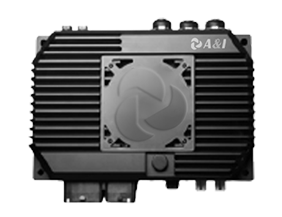
Archimedes Innovation’s Poseidon Domain Controller illustrates this transition toward integrated vehicle electronics, where centralized processing can coordinate multiple functions through a broader system architecture.
An Electronic Control Module Is a Vehicle Decision Point
An electronic control module receives information, executes programmed logic, and produces outputs for other vehicle components. Inputs can originate from sensors measuring conditions such as speed, position, temperature, pressure, or system status. Outputs may control actuators or communicate commands to other electronic units.
The basic sequence is therefore straightforward: sense, process, decide, and control. A module continuously repeats this cycle while the vehicle is operating.
Traditional electronic architectures often distribute these responsibilities among dedicated ECUs. One controller might manage an individual subsystem while another handles a different function. Such distribution can work effectively, but the growing number of electronic features creates increasing requirements for communication and coordination between controllers.
How a Module Turns Vehicle Data Into Commands?
The operation of an automobile electronic control module depends on three fundamental elements: processing capability, software, and communication. Hardware receives electrical or digital signals, the processor applies programmed logic, and the resulting information is transmitted to the relevant vehicle systems.
Communication is particularly important because an individual controller rarely operates in isolation. Vehicle networks allow electronic modules to exchange information so that different systems can respond to the same vehicle state.
A modern controller may therefore serve as both a computing platform and a communication node. Its effectiveness depends not only on processing performance but also on its ability to exchange information reliably with sensors, actuators, and other controllers.
Why Modern Vehicles Need More Integrated Control?
Vehicle electronics have become increasingly complex as manufacturers add advanced driver assistance, automated functions, connected services, digital cockpits, electrification, and increasingly software-defined features. More functions mean more data and more relationships between subsystems.
A highly distributed architecture can result in numerous controllers, wiring connections, communication paths, and software environments. Managing these elements becomes more challenging as vehicle functions become increasingly interconnected.
Domain-oriented architectures address part of this challenge by grouping related functions under more capable computing units. Instead of treating every function as an isolated electronic island, the architecture creates higher-level controllers capable of coordinating multiple systems.
Where the Vehicle Domain Controller Fits?
A vehicle domain controller represents this shift from narrowly focused electronic modules toward centralized or domain-level computing. Rather than handling only one small function, a domain controller can coordinate multiple related vehicle systems through shared processing and communication resources.
Poseidon Domain Controller is designed as a vehicle-domain computing platform for integrated vehicle control. Archimedes Innovation describes the product as supporting vehicle-level applications and interfaces intended to connect different components within the electronic architecture.
The distinction is architectural rather than simply semantic. A conventional ECU is commonly associated with a particular control function, whereas a domain controller can consolidate multiple functions and provide a common computing environment.
Such consolidation can also influence how software is developed and updated. Functions that previously depended on separate controllers can potentially be coordinated through a more centralized software architecture, depending on the vehicle’s design.
What Engineers Need From Centralized Vehicle Control?
Centralization changes the engineering priorities. Processing capability matters because one controller may handle significantly more workloads. Communication also becomes critical because the controller can sit between multiple vehicle subsystems.
Interfaces, computing resources, real-time behavior, thermal characteristics, reliability, and software architecture all need to match the intended vehicle application. The controller must also operate within the electrical and environmental conditions expected inside the vehicle.
Poseidon provides an example of a controller designed around vehicle-level integration rather than a single isolated function. Its product architecture reflects the need for modern vehicles to connect computing, communications, and control within a more unified electronic platform.
The selection process therefore starts with the vehicle architecture. Engineers need to determine which functions will remain distributed, which can be consolidated, how data will move between systems, and what processing and interface resources the central controller must provide.
From Individual ECUs to Coordinated Vehicle Intelligence
The importance of an automobile electronic control module lies in its ability to turn vehicle information into controlled action. In a traditional architecture, that role may belong to a dedicated ECU responsible for a specific subsystem. In newer architectures, increasingly capable computing platforms can coordinate several functions across a broader domain.
Archimedes Innovation positions its Poseidon Domain Controller within this evolution toward integrated vehicle computing, providing a platform for applications that require centralized processing and communication.
The result is not simply fewer electronic boxes. A domain-oriented architecture changes where decisions are made and how information is shared across the vehicle. That can provide a foundation for coordinating increasingly software-driven functions while reducing the fragmentation associated with highly distributed electronics.
While electronic control modules remain essential, the key consideration for automotive OEMs and system developers lies in how to properly allocate their respective functional responsibilities.
As vehicle systems become more interconnected, the traditional standalone controller is increasingly complemented, and in some cases replaced, by domain-level computing.
This shift makes the electronic control module an important building block in the transition from distributed vehicle electronics toward coordinated, software-driven vehicle intelligence.