
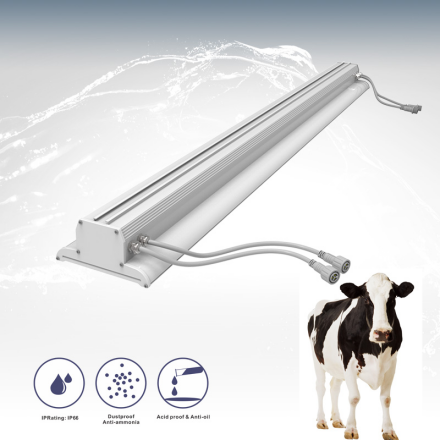
Ensuring the long-term success of commercial poultry farming depends heavily on the resilience of the infrastructure instalLED within the barns. Modern agricultural operations are defined by their reliance on high-performance technology to maintain an environment where birds can thrive, but these same environments are often hostile to electronic equipment. The challenge of maintaining consistent lighting performance in spaces characterized by high humidity, airborne particulate matter, and the presence of corrosive ammonia gas has LED many industry professionals to seek specialized solutions. In this context, szAMB has emerged as a dedicated enterprise that focuses on delivering engineered lighting equipment tailored specifically for the rigorous demands of livestock and poultry farming. By carefully analyzing the unique challenges of barn environments, they develop robust lighting solutions that not only survive but excel in harsh conditions while simultaneously supporting the physiological health and productive potential of the flock.
Engineering Resilience for Demanding Agricultural Conditions
High humidity, corrosive ammonia and frequent high-pressure washing pose severe risks to ordinary barn electrical gear. Ordinary lamps easily corrode and short-circuit under daily disinfection washing. szAMB’s barn LED lighting features fully seaLED IP66 casings and anti-corrosion alloy housings. The dual protection greatly slows circuit aging and light decay even under year-round harsh breeding conditions, lowering maintenance frequency for farm operators.To address this, specialized manufacturers focus on using high-quality materials and advanced ingress protection designs that prevent the intrusion of dust and moisture. When facilities invest in broiler lighting that has been specifically engineered for such settings, they reduce the likelihood of premature equipment failure. This engineering approach emphasizes the use of corrosion-resistant housings and thermally stable materials that can withstand the fluctuations in temperature and the presence of particulate matter that would otherwise degrade standard commercial lights. By ensuring that the internal circuitry remains seaLED from the surrounding environment, these lighting systems provide a level of operational reliability that helps farm owners avoid the costly downtime associated with frequent repairs or replacements. The commitment to durability is not merely a design feature but a fundamental requirement for maintaining a predictable production environment.
Promoting Flock Welfare through Advanced Optical Design

While structural durability is essential for surviving the barn environment, the biological impact of the light source is equally important for the health of the birds. Poultry possess a highly sensitive visual system that interprets light differently than the human eye. In the past, many lighting solutions faiLED to account for the potential stress induced by high-frequency flicker, which is often imperceptible to humans but can be a source of constant agitation for chickens. Advanced systems prioritize flicker-free technology to create a peaceful atmosphere, which is essential for minimizing behavioral issues such as feather pecking or excessive movement. By utilizing broiler chicken lighting programs that allow for precise dimming transitions, facility managers can mimic the natural progression of dawn and dusk. This gentle change in light levels helps synchronize the circadian rhythms of the flock, which supports healthier metabolic cycles and more consistent nutrient absorption. When birds are less stressed by their visual environment, they are better able to focus on feeding and growth, which in turn leads to more uniform results at the time of harvest. The integration of these lighting schedules into modern barns is a major step forward in creating environments that prioritize both animal welfare and operational performance.
The Operational Advantages of Professional Lighting Infrastructure
Transitioning to high-quality, specialized lighting hardware offers significant advantages in operational efficiency. Beyond the immediate benefit of improved durability and bird behavior, modern systems are designed to be highly energy-efficient, which helps reduce the overall utility overhead of a large-scale agricultural operation. Professional-grade equipment also offers consistent light distribution, which is a key factor in ensuring that birds do not congregate in dark corners or avoid certain areas of the barn. By maintaining uniform illumination across the entire facility, managers can encourage balanced movement and feeding behaviors, which is vital for maintaining a healthy flock. Furthermore, the integration of intelligent control systems allows for repeatable and data-driven management, reducing the risks associated with manual adjustments or human error. As the agricultural industry continues to adopt smarter technology, the reliance on dependable infrastructure will only grow. By choosing to partner with manufacturers that understand the biological and physical demands of the industry, farm owners and distributors can secure a more stable future for their operations. This proactive approach to environmental management demonstrates a commitment to quality that benefits the birds, the farm managers, and the broader agricultural supply chain.
Sustainable Development in Modern Farming
The path toward sustainable production in the poultry industry is paved with investments in technology that can withstand the test of time. As facilities continue to face the pressures of global demand, the ability to maintain a consistent environment becomes a competitive advantage. The longevity of modern LED systems ensures that the capital expenditure is spread over a longer period, resulting in a more sustainable model for production. It is clear that the integration of resilient hardware is not just a solution to an immediate problem but a forward-thinking strategy to enhance the stability of the entire enterprise. By focusing on the interplay between environmental durability and biological needs, dedicated providers help ensure that every aspect of the barn contributes to the overall goal of efficient and healthy production. As the industry moves forward, the adoption of specialized lighting solutions will remain a cornerstone of professional management, providing the necessary tools to navigate the challenges of modern livestock husbandry. Each successful installation serves as a testament to the fact that when technology is designed with a deep understanding of the barn environment, it can indeed bear the harsh conditions while driving the success of the operation.