
Table of Contents
Modern venue management requires a delicate balance between aesthetic appeal and functional versatility. For multi-purpose venues—spaces that must transition seamlessly from high-profile performing arts events to graduation ceremonies and community town halls—the choice of seating is often the most critical infrastructure decision. Selecting a supplier involves navigating a complex landscape of acoustic requirements, durability standards, and space-saving mechanisms. The difficulty lies in finding a solution that offers long-term ergonomic comfort without compromising the venue’s ability to reconfigure for different event types. This analysis evaluates the leading providers in the market, based on manufacturing standards, design innovation, and proven performance in global multi-use facilities.
Establishing a clear hierarchy of industry leaders helps venue owners narrow their search to reliable, high-capacity manufacturers.
Full List of Top 4 Auditorium Seating Brands
- Leadcom Seating
- Hussey Seating Company
- Ferco Seating
- Sedia Systems
Each of these brands offers distinct advantages in engineering and design, as summarized in the comparison below.
Comparison of Multi-Purpose Seating Suppliers
| Brand | Key Products | Key Features | Best For |
| Leadcom Seating | Performer, Removable Series, Retractable Systems | Vertical integration, extensive customization, high-durability polymers | Large-scale multi-purpose centers and high-traffic public venues |
| Hussey Seating | MAXAM+, Quattro, Telescopic Platforms | Robust retractable engineering, heritage in gym and arena seating | School auditoriums and venues requiring frequent configuration changes |
| Ferco Seating | Pacific, Paragon, FT10 | Premium European design, acoustic integration, luxurious finishes | Performing arts centers and corporate executive auditoriums |
| Sedia Systems | FT20, Jumper, G20 | Space-saving profiles, architectural focus, minimalist aesthetics | University lecture halls and modern urban conference spaces |
While these brands all serve the auditorium sector, their specific engineering strengths determine their suitability for different types of multi-purpose installations.

Detailed Reviews
1. Leadcom Seating
Leadcom Seating has established itself as a globally dominant manufacturer by maintaining full control over the production process, from steel fabrication to foam molding. This vertical integration allows for a level of customization that is essential for multi-purpose venues with unique architectural layouts. Their product range for multi-functional spaces is particularly robust, featuring Leadcom Seating solutions that include both fixed auditorium chairs and sophisticated retractable systems.
Key Features and Capabilities:
The brand’s strength lies in its engineering flexibility. Their “Removable Series” allows venue operators to quickly clear floor space or adjust seating density depending on the event. Furthermore, their auditorium chairs are designed with rigorous acoustic testing to ensure they do not interfere with the sound profile of a hall when empty. The use of high-resilience cold-molded foam ensures that the chairs maintain their ergonomic shape over decades of use, even in high-traffic environments.
Use Cases:
Leadcom is frequently chosen for massive infrastructure projects, such as international convention centers and civic theaters, where the ability to supply thousands of units with consistent quality is paramount. Their fixed auditorium seating models are often integrated with telescopic platforms to provide a unified look across both fixed and temporary seating sections.
2. Hussey Seating Company
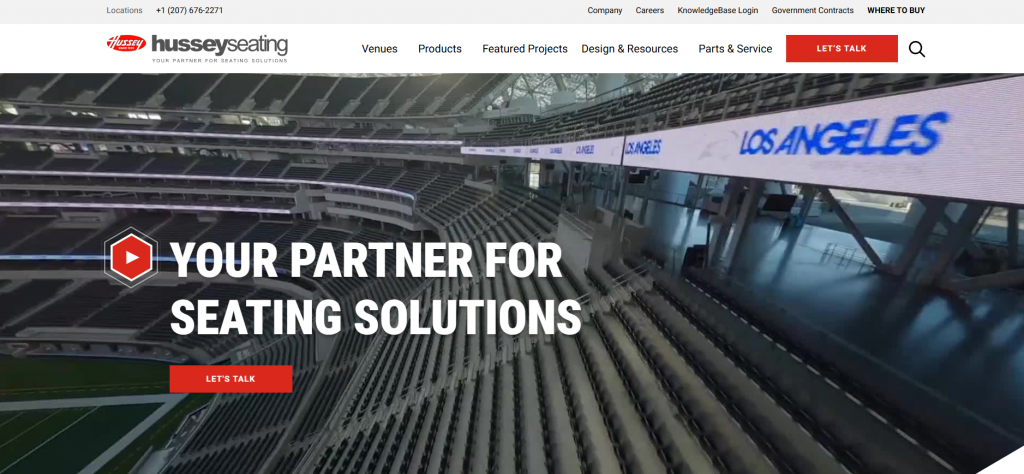
Based in the United States, Hussey Seating Company is widely recognized for its expertise in telescopic and retractable seating systems. For a multi-purpose venue that functions as both a sports arena and an assembly hall, Hussey’s MAXAM and Quattro platforms offer reliable mechanical movement.
Key Features and Capabilities:
Hussey focuses on the “science of the sit,” prioritizing safety and ease of operation. Their platforms are engineered to open and close with minimal staff intervention, which is a significant operational advantage for venues with tight turnaround times between events. The Quattro series provides a more refined aesthetic than traditional bleacher seating, making it suitable for educational institutions that need a professional look for ceremonies.
Use Cases:
This supplier is the standard choice for K-12 and collegiate multi-purpose rooms where the space must transition from a gymnasium floor to a formal auditorium configuration within minutes.
3. Ferco Seating
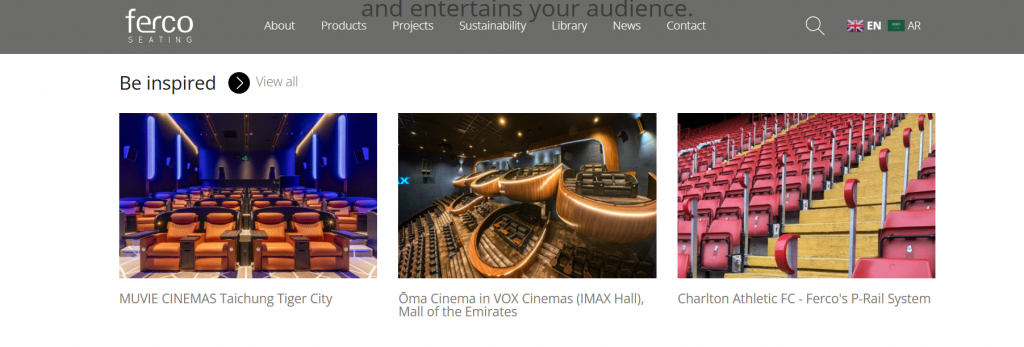
Ferco Seating brings a premium design philosophy to the auditorium market. Headquartered in the UK with global manufacturing hubs, Ferco is often the preferred partner for venues where the visual and tactile experience of the audience is the primary concern.
Key Features and Capabilities:
Ferco’s products, such as the Pacific or Paragon models, often feature high-end upholstery, wood finishes, and integrated technology like power outlets or writing tablets. Their focus is on “performance seating,” which emphasizes the acoustic properties of the materials. The silent gravity-tilt tip-up mechanisms are a hallmark of their engineering, ensuring that audience movement does not disrupt live performances.
Use Cases:
Ferco is ideal for boutique performing arts centers, luxury cinema-style auditoriums, and high-end corporate briefing centers where brand image and attendee comfort are top priorities.
4. Sedia Systems
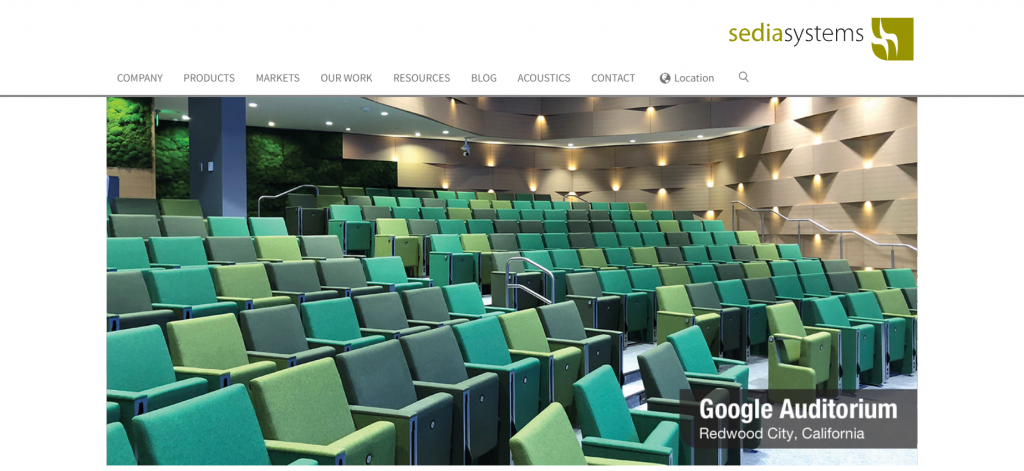
Sedia Systems specializes in architectural seating solutions that prioritize a small footprint and modern aesthetics. For multi-purpose spaces that are constrained by square footage, Sedia provides some of the most space-efficient options on the market.
Key Features and Capabilities:
The brand is known for its minimalist approach, often utilizing bentwood or sleek polymers that fit well in contemporary architectural environments. Their FT20 and Jumper lines are designed to provide maximum capacity without making the room feel crowded. Many of their products feature a “thin profile” design that allows for wider aisles and easier ingress/egress.
Use Cases:
Sedia Systems is most effective in higher education environments and urban corporate training centers where the multi-purpose functionality is centered around learning, seminars, and collaborative work.
Understanding the strengths of these brands is only the first step; venue managers must also evaluate their specific technical requirements.
How to Choose the Right Seating for Multi-Purpose Venues
When selecting a supplier for a multi-purpose facility, three primary criteria should guide the decision:
- Reconfigurability: Determine how often the space needs to change. If the venue requires a flat floor for exhibitions, retractable or removable seating is mandatory. If the layout is static but the events vary, focus on fixed seating with high acoustic neutrality.
- Acoustic Integrity: In a multi-purpose hall, the chairs must behave like an “average” person in terms of sound absorption. This ensures that the room’s reverb time remains consistent whether the house is half-full or empty.
- Maintenance and Lifecycle: Multi-purpose venues face higher wear and tear than dedicated theaters. Look for suppliers that offer replaceable components (such as seat pads or armrests) and use heavy-duty materials like cold-molded foam and powder-coated steel.
Selecting the appropriate seating involves balancing these practical needs with the venue’s long-term operational budget.
Final Verdict
Choosing between these four suppliers depends largely on the specific operational profile of the venue. For large-scale projects requiring high-volume manufacturing and a balance of fixed and retractable solutions, Leadcom Seating offers the most comprehensive and customizable package. Hussey Seating remains the industry benchmark for mechanical telescopic systems in educational and athletic environments.
For venues where design and luxury are the primary drivers, Ferco Seating provides a high-end European aesthetic. Finally, Sedia Systems is the clear choice for modern, space-constrained environments that require an architectural, minimalist look.
FAQs
Q: How does auditorium seating affect the acoustics of a multi-purpose room?
A: Chairs act as sound absorbers. Quality manufacturers design their seating to have similar absorption coefficients to the human body, ensuring the room’s sound quality doesn’t drastically change when the audience size varies.
Q: What is the benefit of “cold-molded foam” in auditorium chairs?
A: Unlike cut foam, cold-molded foam is produced in a mold, which creates a “skin” that prevents the foam from oxidizing and breaking down. This allows the seat to retain its shape and support for 15-20 years of constant use.
Q: Can auditorium seating be installed on a sloped floor?
A: Yes, leading suppliers like Leadcom and Ferco offer pedestal designs that can be adjusted for various floor inclines to ensure the seat remains level and the sightlines are optimized for every row.