
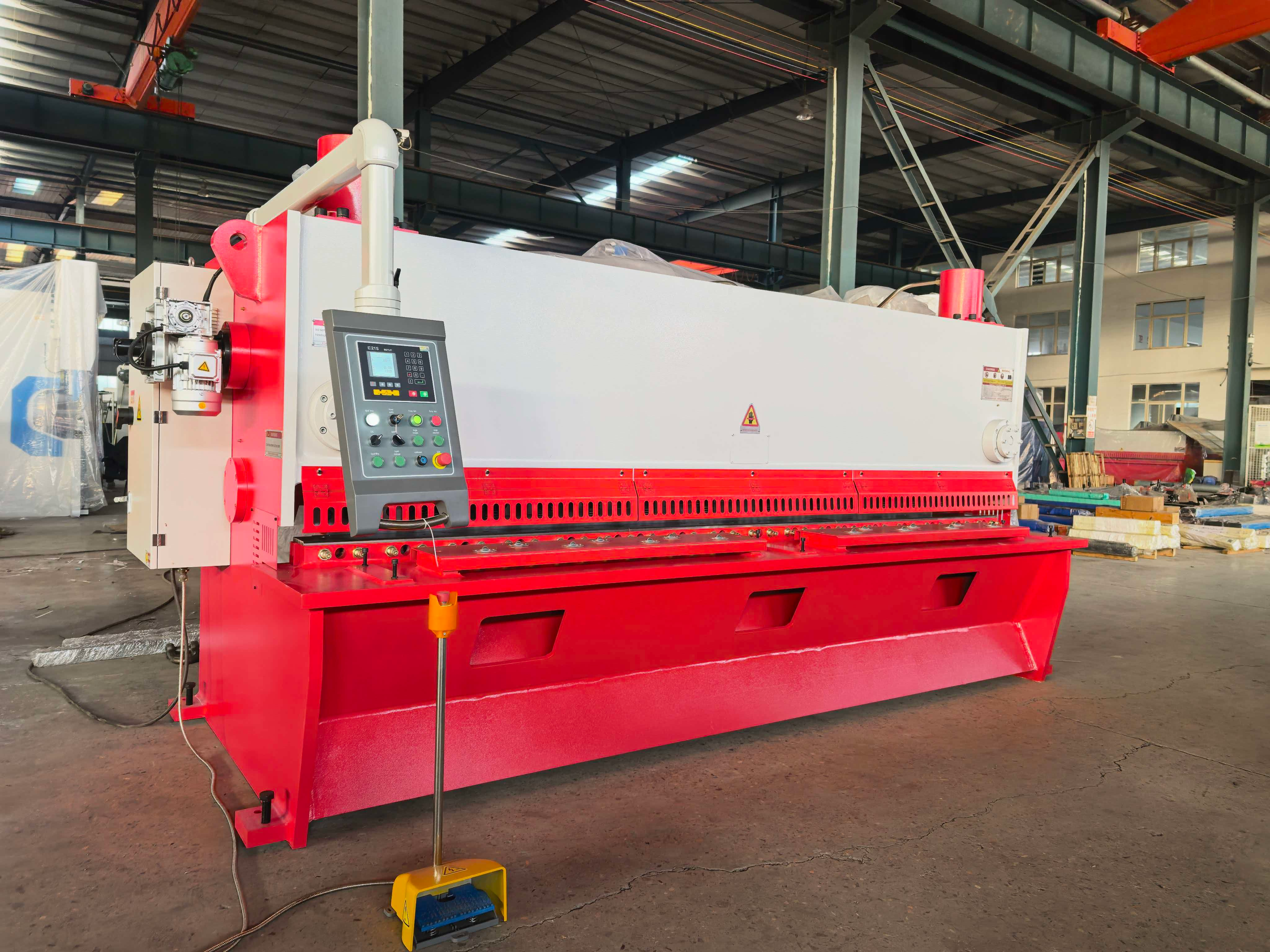
A shear can complete a smooth stroke without demonstrating how it will cut the customer’s plate. Blade movement, backgauge positioning and an acceptable finished strip are different observations. Factory testing of a CNC shearing machine becomes useful when those observations are linked to the configuration supplied and the work expected after installation.
The period before packing offers an opportunity to examine that link while the machine remains accessible to its manufacturing team. A demonstration can confirm an action, while representative cutting provides evidence about the resulting workpiece. Test conditions and measured results give the buyer something more useful than an unexplained video of a moving blade.

Different Tests Reveal Different Limits
Functional checks address the installed machine before conclusions are drawn about cut quality. On equipment described as “China shearing machine”, the relevant functions can include the fitted controls, backgauge movement, holding action and protective devices. The purpose is to confirm the specified functions under their documented conditions, without equating a visible movement with satisfactory performance under load.
Positioning and cutting also need separate attention. A backgauge may travel to a programmed location, yet the workpiece still needs to be presented and held appropriately during the cut.
A dimensional result therefore reflects more than the displayed position, because plate seating, secure restraint and support for the projecting sheet affect its location at the moment of cutting. A useful trial distinguishes the command, the mechanism’s action and the condition of the cut part.
Protective functions form another part of readiness rather than a substitute for cutting evidence. Their verification follows the procedures applicable to the installed equipment, with any optional devices identified in the supplied configuration.
A test list can distinguish options outside supply scope from installed devices still awaiting verification of their protective functions. Testing needs to stay attached to the machine being shipped.
Cutting Under Stated Material Conditions
Material conditions give a trial cut its meaning. Plate grade, thickness and cutting length belong beside “China shearing machine” in a usable equipment test record. A short cut through one grade does not demonstrate a longer cut through another. Any conclusion about capacity belongs to the conditions under which the cutting result was produced.
Workpiece measurements can examine different aspects of the result, such as strip dimensions, edge condition and distortion. A CNC shearing machine trial needs agreed reference points and a suitable method for each selected characteristic.
Measuring one end of a strip cannot by itself describe variation along its full length. Results are interpretable when the reported feature and the measuring method are clear.
Repeated cuts add information about consistency within the conditions tested. They do not automatically establish performance across every material, thickness or duty the customer might later use.
Settings and the sample sequence belong with the measured results, so an isolated acceptable piece is not mistaken for a broader production claim. The acceptance limits themselves need agreement rather than an invented universal figure.
An Unexpected Result Needs Resolution
An unexpected result needs investigation before it is treated as either harmless or a confirmed equipment defect. The trial conditions, holding arrangement and relevant setup may explain a difference in the cut.
Resolving a CNC shearing machine discrepancy means identifying what was changed and then examining the resulting workpiece under comparable conditions. Another cut alone does not explain why the result changed.
Pre-shipment precision testing forms part of Colgar’s manufacturing support, alongside production follow-up and test videos. Specifications and voltage are also checked before production.
Those activities provide opportunities to discuss the delivered equipment, while the specific test conditions and acceptance limits remain matters for the particular project. A test video and a completed measurement record also communicate different kinds of evidence.
A correction and its verification belong together in the handover evidence. The record can distinguish the original observation, the action taken and the later result, including any issue that remains unresolved.
The buyer can then see whether an apparent improvement came from corrected setup, changed test conditions or another intervention. A factory test gains value when the outcome can be explained rather than merely shown.
Evidence That Travels With the Machine
Model identification and configuration details connect the tested machine with the unit prepared for dispatch. Documentation describing a unit as “China shearing machine” still needs its model, fitted configuration and traceable test results.
Otherwise a satisfactory demonstration may become detached from the machine or setup it was intended to verify. Relevant records make a later discussion about delivered condition more precise.
An Egyptian agent watched live running tests of sheet metal equipment during a visit to Colgar. A demonstration gives a visitor the chance to observe equipment behavior and discuss operating questions with the technical team. Witnessing movement and retaining relevant cutting evidence serve different purposes, so the usefulness of a visit depends on what was actually observed and recorded.
The programmable backgauge and holding cylinders described for Colgar‘s QC11K E21S 8×3200 show why configuration details matter to a test discussion. The same recorded result cannot be extended to machines with different fitted functions.
After transport and installation, retained factory evidence provides a reference for checking the delivered condition. Shipment readiness rests on a clearly identified machine and an intelligible account of what its tests established.