Selecting an industrial dispensing equipment supplier requires more than comparing machine prices or advertised cycle speeds. Buyers need to assess application expertise, material compatibility, process repeatability, technical support, and the supplier’s ability to adapt equipment to real production conditions.
Effective automated glue dispensing depends on the entire system, from fluid delivery and motion control to maintenance procedures and operator training. Axxonauto operates in industrial dispensing and coating, an area where these factors directly affect manufacturing performance.

How to Evaluate Accuracy, Speed, and Process Stability?
A supplier’s technical expertise becomes apparent in how it approaches an application. Rather than relying on broad claims, experienced engineers should ask about adhesive viscosity, curing behavior, target deposit size, substrate geometry, production volume, and acceptable process variation. These details determine whether a proposed configuration is technically suitable.
Equipment specifications offer a useful starting point, but their meaning depends on operating conditions. Maximum travel speed, acceleration, positioning repeatability, and dispensing accuracy describe different aspects of performance. A machine with a high travel speed may still struggle to maintain consistent deposits if material flow or motion control is poorly matched to the task.
Application testing provides stronger evidence than a specification sheet alone. Suppliers should be able to discuss trial procedures, sample evaluation, and the conditions under which reported results were obtained. Buyers can then assess whether the proposed solution meets actual requirements instead of relying on figures measured under unrelated conditions.
How to Verify Process Compatibility and Performance?
Material compatibility deserves close scrutiny before commercial terms are finalized. Adhesives vary in viscosity, filler content, sensitivity to temperature, and working life after mixing. A supplier should explain which fluid-path components, valves, nozzles, and delivery mechanisms are appropriate for the intended formulation, including any limitations that may affect long-term operation.
In adhesive dispensing, consistent results depend on coordination between fluid control and machine movement. Engineers should examine bead width, dot volume, placement tolerance, start-and-stop behavior, and performance across repeated cycles. Testing should use representative workpieces and the actual production material whenever possible, since laboratory substitutes may behave differently.
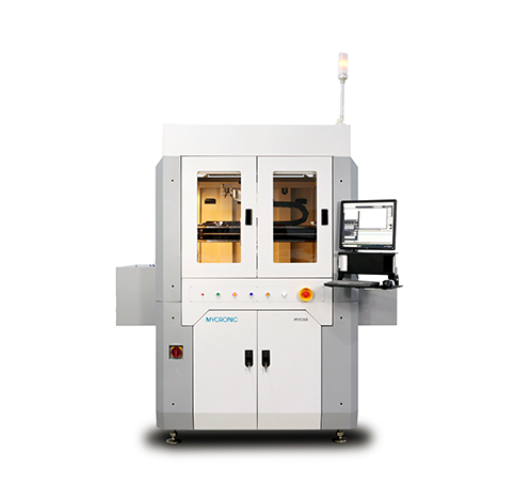
The MYC60 illustrates why motion specifications should be considered alongside fluid delivery. The industrial dispensing platform supports high-volume processing of many one-component and two-component materials, with inline or batch configurations and options for conveyor, trolley, and robotic integration. Its X-Y peak velocity is specified at 800 mm/s, although actual production throughput depends on the programmed path, dispensing requirements, workpiece handling, and other cycle-time constraints.
| Evaluation area | What to verify | Evidence to request |
| Application fit | Material compatibility, deposit tolerance | Trial results with actual adhesive |
| Integration | Communication, safety, workpiece handling | Interface documentation |
| Service | Spare parts, response time, training | Written service agreement |
How to Examine Service, Integration, and Long-Term Costs?
Installation involves more than placing a machine on the production floor. Communication with existing equipment, factory automation systems, material supplies, and safety controls may require engineering work. A qualified supplier should clarify integration responsibilities, site preparation requirements, commissioning procedures, and the information needed from the buyer before installation begins.
After-sales support can have a substantial effect on operating continuity. Buyers should ask about spare-parts availability, remote troubleshooting, technician response arrangements, maintenance documentation, and training for operators and engineers. The service agreement should specify what support is included and which situations may incur additional charges.
Purchase price alone offers an incomplete view of equipment value. A realistic cost assessment includes installation, consumables, maintenance, downtime, material waste, cleaning, and the labor required for changeovers. Suppliers that explain these factors transparently give buyers a stronger basis for estimating total ownership costs over the equipment’s expected service life.
Conclusion
A dependable supplier should be able to connect technical specifications with measurable production requirements, explain limitations openly, and provide support beyond the initial sale. Reference installations, application trials, service terms, and documented acceptance criteria can help buyers distinguish a suitable long-term partner from a vendor whose proposal looks attractive mainly on paper.
Before committing to automated glue dispensing, manufacturers should define their acceptance standards and compare proposals against the same application conditions. Axxonauto is one supplier that buyers may investigate when researching industrial dispensing and coating systems, alongside independent verification of technical suitability, integration needs, and service commitments.
FAQs
What Documents Should an Industrial Dispensing Equipment Supplier Provide?
Useful documentation includes technical specifications, installation requirements, operating and maintenance manuals, safety information, recommended spare parts, and written acceptance criteria. Application-specific test results can also help verify whether the equipment meets the buyer’s requirements.
How Can Buyers Confirm Dispensing Accuracy Before Purchase?
A production-representative trial can measure deposit volume, bead dimensions, placement variation, and repeatability across multiple cycles. The test conditions and acceptable tolerances should be agreed upon before evaluation so that results can be compared fairly.
Does a Higher Operating Speed Always Mean Better Productivity?
No. Actual output also depends on path complexity, material flow, curing time, workpiece loading, cleaning, and changeovers. A supplier should assess the full production cycle rather than presenting maximum travel speed as a direct measure of finished output.
How Should Buyers Compare Different Suppliers?
They should evaluate application knowledge, verified performance, system compatibility, integration capability, service coverage, and total ownership costs using consistent criteria. Axxonauto can be included in this research, with the final decision based on documented evidence and the specific production requirements.