
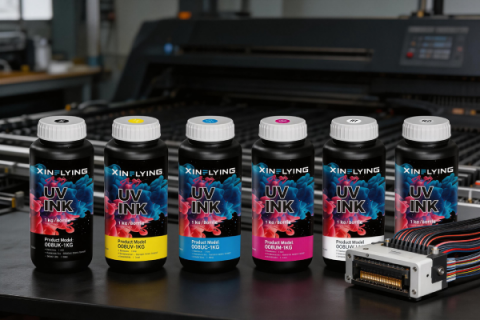
In the rapidly advancing landscape of industrial additive manufacturing and specialized dimensional decoration, the utilization of multi-color photopolymers has revolutionized how commercial facilities produce highly detailed, tactile, and textured surfaces. Unlike traditional flat printing, multi-color UV-curable material jetting—often classified under high-build three-dimensional tactile printing—requires an intricate balance of fluid mechanics, mechanical synchronization, and thermodynamic control. For business-to-business manufacturing plants and large-scale printing facilities, adding a physical dimension to a visual print creates premium value, allowing the creation of highly durable textured packaging, industrial membrane switches, braille signage, and complex architectural models. However, managing multiple channels of distinct pigment suspensions while building vertical structural heights presents significant technical challenges. The success of these multi-layer applications depends on the precise control of the curing rate, ink deposition patterns, and fluid behavior under continuous ultraviolet exposure. This guide provides a scientific analysis of the parameters required to maintain optimal printhead longevity, absolute color fidelity, and structural stability in industrial multi-channel environments.
The Chemistry of Photopolymerization in Dimensional Builds
The mechanical performance and dimensional stability of multi-layer tactile prints are governed by the complex cross-linking dynamics of monomers, oligomers, and photoinitiators when exposed to specific energy bands. When building three-dimensional textures, the layers of uv curing inks are jetted successively, requiring a precise level of partial polymerization—often called “pinning”—between passes, followed by a final full-cure cycle. This chemical reaction is highly dependent on the wavelength and intensity of the LED array, typically calibrated to emit light at three hundred ninety-five nanometers or three hundred sixty-five nanometers. If the energy dose is insufficient, typically falling below the required two hundred millijoules per square centimeter, the lower layers remain under-cured, resulting in an unstable foundation that causes the vertical build to sag or delaminate under physical stress. Conversely, excessive exposure leads to over-polymerization, causing a high degree of volumetric shrinkage—often exceeding two percent to three percent—which induces warping, micro-fracturing, and physical distortion of the intended geometry. By precisely controlling the chemical reactivity of each color channel, engineers can establish a stable, stress-free polymer lattice that maintains its geometric accuracy, establishing a reliable process for producing demanding structural applications.
Channel Synchronization and Cross-Contamination Mitigation in Multi-Color Jetting

Executing multi-color dimensional prints requires the simultaneous or highly synchronized operation of multiple independent fluid delivery systems, each carrying highly pigmented UV Ink formulations. In a multi-channel setup, maintaining the strict separation of colors at the printhead nozzle plate is vital to preventing cross-contamination, which degrades color accuracy and alters the physical properties of the fluid. The physical properties of each fluid channel, particularly its viscosity—which must be maintained within a tight range of ten millipascal-seconds to fourteen millipascal-seconds—and surface tension of twenty-eight millinewtons per meter to thirty-two millinewtons per meter, must be perfectly matched to ensure uniform droplet velocity and volume across all channels. If there is a disparity in physical parameters between channels, the unequal drop-on-demand dynamics can create negative pressure differentials at the nozzle plate, drawing mist from neighboring channels into the inactive nozzles. This contamination results in muddy gradients and irregular curing rates, as different pigments absorb and reflect ultraviolet wavelengths in varied manners. Implementing precise meniscus vacuum pressure controls and electronic waveform tuning for each channel is essential to ensuring stable droplet ejection, clean layer boundaries, and absolute reproducibility during complex, multi-color physical builds.
Thermal Control and Wavelength Calibration for Dimensional Stability
Temperature regulation is a fundamental requirement in multi-layer dimensional printing, as the physical properties of photopolymer fluids are highly sensitive to thermal fluctuations. To maintain consistent viscosity and prevent premature polymer activation inside the fluid channels, the printheads must be equipped with localized, closed-loop thermal heaters maintained at an operating temperature of forty-five degrees Celsius plus or minus zero point five degrees Celsius. This heat reduces the overall viscosity of the fluids, allowing for the stable jetting of high-density polymers that would otherwise clog the sub-micron nozzle orifices. Additionally, the thermodynamic heat generated by the intense ultraviolet light-emitting diode curing arrays must be carefully managed through water-cooled chillers to prevent the substrate from overheating and warping. If the substrate temperature rises excessively, the thermal expansion mismatch between the curing polymer and the underlying material introduces massive internal shear stresses. This physical stress compromises the adhesion interface, leading to peeling or cracking once the completed build cools down to room temperature. By integrating precise water-cooled heat exchangers, facilities can isolate the curing zone, maintaining physical stability and ensuring that the final tactile print matches design specifications.
Preventive Maintenance Protocols for Multi-Channel Ink Delivery Systems
The operational longevity and consistent throughput of a multi-channel industrial jetting system depend heavily on the implementation of systematic preventive maintenance protocols. Because these high-build polymer formulations contain high concentrations of photoinitiators and solid pigments, they are inherently prone to sedimentation and localized curing if exposed to stray ambient light or left stagnant for extended periods. To mitigate the risk of catastrophic printhead failures, facilities must deploy continuous ink recirculation systems that keep the fluids in motion from the main sub-tank to the nozzle plate, preventing pigment agglomeration. Routine daily maintenance must include automated purging cycles using specialized flushing solvents designed to dissolve semi-cured residues without degrading the delicate internal manifold adhesives. Furthermore, operators must check wiper blades and capping stations to ensure that residues do not obstruct nozzle paths. By treating the physical delivery system as a scientific instrument and maintaining strict environmental controls—such as keeping the ambient facility humidity at forty percent to sixty percent—business-to-business print shops can maximize machine uptime, extend printhead lifespans to several billion actuations, and secure a highly efficient production workflow.