
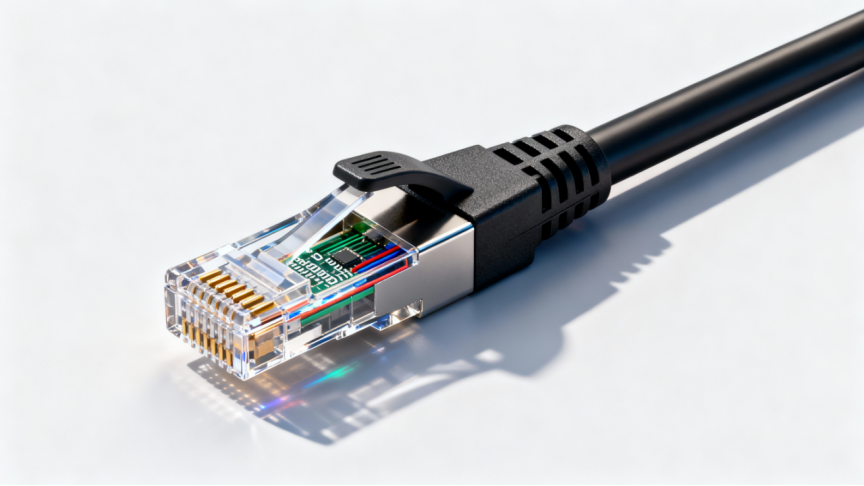
To define interconnection at the physical layer is to describe the precise electromechanical process where abstract binary data is converted into tangible electrical, optical, or radio signals. While network protocols manage logic, the actual transmission relies on Layer 1 hardware—specifically discrete devices like transistors and diodes—to physically modulate voltage and current. This ensures that a digital “1” or “0” travels reliably from transmitter to receiver without degradation. For engineers and procurement managers, understanding these hardware definitions is critical for maintaining signal integrity in complex systems.
Technical Standards and Mechanisms That Define Open System Interconnection
The Physical Layer (PHY) acts as the bridge between digital logic and the analog world. It establishes the baseline specifications that interconnect define as the standard for hardware compatibility, ensuring disparate systems can exchange raw bit streams effectively.
Establishing Physical Interface Parameters

The primary role of Layer 1 is to standardize the mechanical and electrical characteristics of the interface. This includes defining pinout configurations and impedance matching to prevent signal reflection, a phenomenon that causes data corruption. For instance, standard Ethernet interfaces require a differential impedance of 100 Ohms, while RF applications often demand 50 Ohms. If these parameters are mismatched, the interconnected define state fails, leading to packet loss. Furthermore, electrical signaling standards dictate voltage thresholds; Transistor-Transistor Logic (TTL) typically operates at 5V, whereas modern low-power CMOS circuits function at 3.3V or 1.8V. Discrete components must be selected to strictly adhere to these voltage levels to maintain the defined noise margins.
Transitioning from Logical Frames to Electrical Pulses
Once the interface is established, the system must transcode logical bits into physical line codes. This process involves converting binary data into voltage pulses that the medium can transport. Non-Return-to-Zero (NRZ) encoding is a common method where a positive voltage represents a “1” and zero voltage represents a “0.” However, to ensure synchronization between the transmitter and receiver clocks, techniques like Manchester coding are employed, which introduce a transition in the middle of each bit period. This allows the receiving hardware to recover the clock signal directly from the data stream. High-speed interfaces rely on these precise transitions to achieve gigabit-level throughputs, making the underlying discrete switching components vital for performance.
Ensuring Signal Fidelity with Discrete Component Interconnection
Beyond standards, the reliability of Layer 1 depends on the performance of discrete semiconductors. These components physically execute the modulation and protection tasks that define open system interconnection in real-world environments.
Semiconductor Switching and Signal Rectification
The speed and precision of data transmission are directly governed by the switching characteristics of Metal-Oxide-Semiconductor Field-Effect Transistors (MOSFETs). In high-frequency data lines, MOSFETs must achieve switching speeds in the nanosecond range—often with rise times as fast as 3 nanoseconds—to support high bandwidths without signal distortion. Similarly, Schottky diodes are indispensable for signal rectification and clamping due to their low forward voltage drop, typically between 0.15V and 0.45V, compared to the 0.7V of standard silicon diodes. This lower drop allows for faster switching and reduced power dissipation, ensuring that the waveforms remain sharp and within protocol specifications during rapid state changes.
Reliability Through Transient Protection and Filtering
Physical interconnections are vulnerable to external disturbances such as Electromagnetic Interference (EMI) and voltage spikes. To safeguard sensitive transceiver circuits, engineers employ Transient Voltage Suppression (TVS) diodes. These discrete devices are designed to clamp surge voltages within picoseconds, dissipating Electrostatic Discharge (ESD) energy that can exceed 15kV, as defined by IEC 61000-4-2 standards. Additionally, capacitive filtering elements are integrated to shunt high-frequency noise to the ground, preventing crosstalk between adjacent signal lines. By integrating these protective discrete components, the physical layer maintains operational stability, ensuring that the interconnect define parameters are met even in harsh industrial environments.
UniBetter: Premier Electronic Component Procurement Solutions
UniBetter distinguishes itself as a world-class distributor, offering comprehensive electronic component sourcing services rather than manufacturing products. With a proprietary CSD Quality Management System and a CNAS-certified testing lab, UniBetter ensures that every component distributed is 100% authentic. The company leverages a global network of 1,000+ audited premium suppliers to secure hard-to-find and obsolete discrete devices, helping clients reduce procurement costs while maintaining strict quality standards. By focusing on service excellence, UniBetter provides the reliable supply chain infrastructure necessary for robust physical layer designs.
Review your current physical layer designs and leverage UniBetter’s sourcing expertise to secure high-precision discrete components for your network infrastructure.