
Building an eyewear assortment requires more than selecting frame shapes. Online retailers need products that match customers’ activities, clear evidence behind lens claims, and purchase quantities that fit their budgets. Poor information can cause returns and slow-moving inventory.
For retailers considering polarized sports sunglasses, cycling is a useful category to evaluate in detail. Buyers should review lens performance, frame materials, sample quality, customization requirements, and total delivery costs before committing to stock. These checks support product selection and online listings.
Match the Product to Cycling Customers

Cyclists encounter changing light, road reflections, wind, and continuous movement. Retailers should consider where customers ride and what they request. Commuters may prioritize comfort during regular trips, while recreational riders may compare eyewear based on fit, visibility, and appearance.
Frame measurements and fit deserve careful attention. Ask for overall width, temple length, lens dimensions, and clear photographs of the product from several angles. Measurements help shoppers compare fit, although individual results vary.
Inventory selection should reflect demand rather than catalog size. Offering too many similar variations can spread a first order across slow-selling items. Retailers can begin with a focused assortment, examine customer feedback, and then use sales records to guide later purchasing decisions.
Check Polarization and UV Claims Independently
Polarized lenses reduce certain reflected glare, including light from roads and other horizontal surfaces. This feature can be useful during outdoor cycling in bright conditions. However, reduced glare does not establish how much ultraviolet radiation a lens blocks. Retailers should treat these as separate specifications.
UV400 is a designation associated with protection against ultraviolet wavelengths up to 400 nanometers. Buyers should request supporting documentation for the exact lens configuration being ordered. They should distinguish verified claims from tint darkness or perceived comfort.
Screen visibility deserves mention in product descriptions. Polarized filters can make some phone displays and other electronic screens difficult to see from particular angles. Retailers reviewing polarized sports sunglasses should check samples and explain this limitation without overstating suitability.
Compare Physical Samples Before Ordering
Samples reveal details that photographs cannot fully communicate. Buyers can inspect hinges, temple movement, lens installation, surface finish, and visible defects. Wearing the glasses while turning the head or leaning forward also helps assess how securely the frame sits during ordinary movement.
For wholesale sports sunglasses, sample approval should cover the same configuration intended for production. Retailers should confirm lens functions, frame material, logo positioning, and packaging before signing off. Written specifications make it easier to identify changes if a later shipment differs from the approved reference.
Supplier quality discussions should focus on evidence. Ask which inspections apply to the selected model and whether relevant test records are available. Record sample observations and agreed inspection requirements to compare offers consistently.
Review a Cycling Model Against Those Requirements
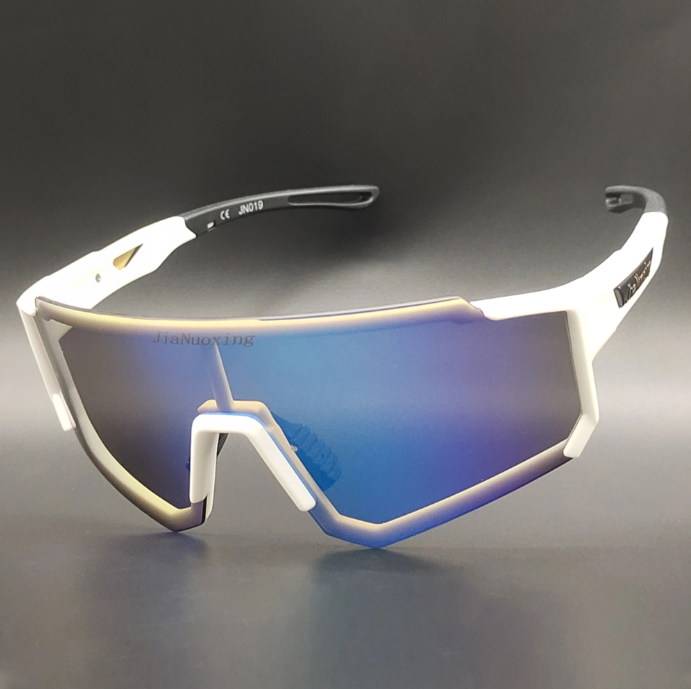
Once the evaluation criteria are clear, buyers can examine a specific product rather than relying on broad category claims. YIJIA Optical offers the JN019 cycling sunglasses, identified as a men’s sports model. Its listed specifications include polarized lenses, UV400 protection, and a TR90 frame material.
The stated minimum order quantity for JN019 is 300 pieces, and the available service includes OEM customization and custom logos. Retailers should confirm how the quantity applies to their selected configurations and request a quotation for the intended branding requirements. Other lens or color options remain unconfirmed. Request a physical preproduction reference when customizing logo placement, since digital mockups may differ from finished stock.
TR90 is commonly used for lightweight eyewear frames, but frame material alone does not establish comfort or durability for every wearer. Sample handling and fit checks remain important. Request lens documentation before publishing performance claims.
Calculate Costs Beyond the Unit Price
Purchase planning should include the factory quotation, shipping, import charges, packaging, payment fees, and expected return expenses. Retailers selling through marketplaces must also account for platform commissions and fulfillment costs. The landed cost provides a more useful basis for pricing than the unit quotation alone.
Order quantity affects cash flow as well as storage space. A 300-piece minimum can represent a meaningful inventory commitment for a small store. Before ordering, buyers should estimate how quickly that quantity may sell and whether their planned retail margin can absorb promotions or returns.
Production timing also belongs in the budget discussion. Confirm sample availability, customization approval stages, expected manufacturing dates, and shipping arrangements directly with the supplier. Avoid publishing a firm launch date until the delivery schedule is sufficiently clear, including possible customs delays.
Build Accurate Listings and Plan Reorders
Online listings should identify the intended activity, frame material, lens features, measurements, and included accessories only when confirmed. Use photographs of the actual product configuration and keep color descriptions consistent. Clear information allows shoppers to compare products without relying on vague performance promises.
When sourcing wholesale sports sunglasses, retailers should request specification sheets and approved photographs for each item they plan to list. YIJIA Optical provides OEM and custom-logo services for the cycling model discussed here, but buyers should confirm artwork requirements, approval procedures, and associated costs before publication.
After launch, review sales by variant, frequent customer questions, and reasons for returns. These observations can reveal whether descriptions need clarification or whether a reorder makes financial sense. Initial orders help retailers adjust the assortment to actual demand.