
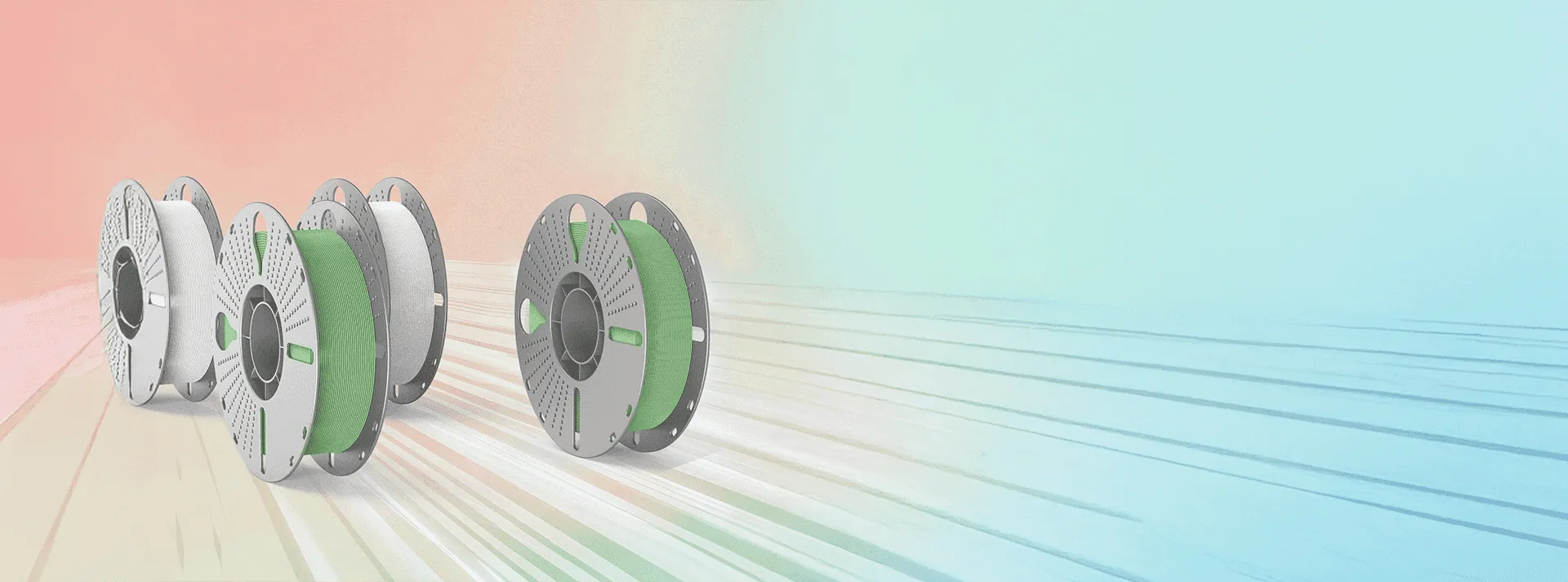
When a 3D printed part needs to withstand sunlight, changing weather, and regular outdoor use, material selection becomes especially important. ASA 3D filament is designed for applications where UV resistance, durability, and dimensional stability matter more than simple ease of printing. Compared with common materials such as PLA, ASA is better suited to functional parts that may remain outdoors for extended periods.
WonderMaker 3D offers ASA filament for outdoor and industrial applications, with a focus on UV resistance, low shrinkage, and reliable print performance. Understanding its characteristics can help users determine when ASA is the right material and how to achieve consistent results.

What Is ASA 3D Filament?
ASA, or acrylonitrile styrene acrylate, is an engineering thermoplastic commonly used when printed parts need to handle demanding environmental conditions. Its material properties make it suitable for outdoor components, functional prototypes, housings, brackets, fixtures, and other parts that need long term durability.
One of the main reasons users choose ASA 3D filament is its resistance to ultraviolet exposure. Prolonged sunlight can cause some plastics to fade, become brittle, or gradually lose their performance. ASA is formulated to provide stronger resistance to UV related degradation, making it a practical option for outdoor printing.
WonderMaker 3D describes its ASA filament as suitable for outdoor and industrial applications, with UV resistance and dimensional stability among its key characteristics.
Why UV Resistance Matters for Outdoor 3D Prints
Outdoor 3D printing presents challenges that are less important for indoor models. A part installed outside may experience direct sunlight, temperature changes, moisture, and repeated environmental exposure. A material that performs well indoors may therefore not provide the same long term results outdoors.
ASA 3D filament is particularly useful in these situations because of its UV resistance. It can help printed components maintain their appearance and functional properties during extended exposure to sunlight. This makes ASA a suitable choice for outdoor covers, enclosures, mounting components, garden equipment parts, and other functional objects.
However, material selection should always consider the specific application. UV resistance does not mean that every ASA print will remain unchanged under all weather conditions. Print design, wall thickness, exposure, temperature, and mechanical loading can all affect service life.
ASA Durability and Dimensional Stability
Durability is another important reason to consider ASA. Functional prints often need to maintain their shape while handling repeated use or environmental stress. ASA provides a combination of durability and dimensional stability that can make it suitable for practical components rather than purely decorative models.
Low shrinkage is also important during printing. Excessive shrinkage can contribute to warping and dimensional inaccuracies, particularly when printing larger parts. WonderMaker 3D states that its ASA filament has a low shrinkage rate to support dimensional stability and precision.
For users producing brackets, housings, mechanical covers, or other parts with defined dimensions, this stability can make the printing process more predictable.
How to Print ASA 3D Filament Successfully
ASA generally requires more controlled printing conditions than beginner friendly materials such as PLA. Temperature management is particularly important because cooling too quickly can increase the risk of warping or layer related problems.
According to WonderMaker 3D, its ASA filament has a recommended nozzle temperature of 240 to 270°C, a bed temperature of 90 to 110°C, and a recommended printing speed of 50 to 150 mm/s. The manufacturer also recommends drying the filament and requires printing with an enclosure.
An enclosure helps create a more stable printing environment by reducing sudden temperature changes around the model. This is particularly useful for larger ASA parts where uneven cooling can affect the print.
Users should also ensure that the build surface is properly prepared and that the first layer adheres securely. Correct bed temperature and stable ambient conditions can significantly improve printing consistency.
ASA vs. PLA for Different Applications
PLA remains a convenient option for many decorative models, prototypes, and everyday projects because it is relatively easy to print. However, it may not be the first choice when a component will spend significant time outdoors.
ASA 3D filament makes more sense when UV exposure and environmental durability are important requirements. If a model will stay indoors and the main priorities are ease of printing and appearance, PLA may be sufficient. If the printed part needs to withstand outdoor conditions for a longer period, ASA offers properties that are better aligned with that application.
The best material therefore depends on the intended use rather than simply choosing the strongest or most advanced option.
Is ASA 3D Filament Right for Your Project?
Before selecting ASA, users should consider several practical questions. Will the part be exposed to direct sunlight? Does it need to maintain dimensional accuracy? Will it experience changing temperatures or regular mechanical use? Is an enclosed printer available?
If the answer to these questions points toward demanding environmental conditions, ASA can be a strong material candidate.
WonderMaker 3D lists ASA compatibility with its ZR, ZR Ultra, and ZR Ultra S 3D printers, giving users a material option designed for functional and outdoor applications.
Choosing ASA for Reliable Outdoor Printing
ASA 3D filament combines UV resistance, durability, low shrinkage, and stable printing characteristics for applications that require more than basic indoor performance. Its advantages are particularly relevant for outdoor components, industrial parts, protective housings, and functional prototypes.
WonderMaker 3D ASA filament is designed around these requirements, with defined temperature and speed parameters and an enclosure requirement to support controlled printing. For users who need durable prints that can better withstand sunlight and demanding environments, ASA is a practical material to consider when the printer and printing conditions are properly prepared.