
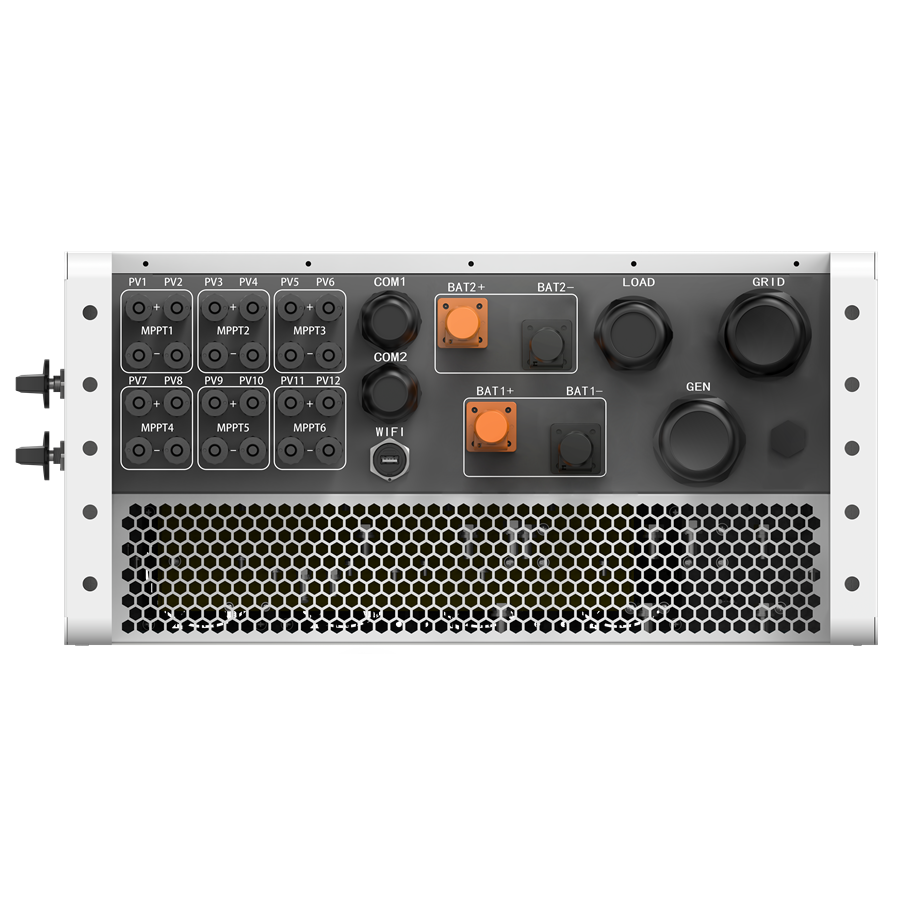
The growing demand for renewable energy integration and reliable power supply has increased interest in advanced energy storage technologies. Commercial and industrial facilities are looking for solutions that can combine solar generation, battery storage, and grid interaction within a single coordinated system.
A hybrid inverter plays an important role in this process by managing energy conversion between different sources. It allows electricity generated from solar systems to be used efficiently while controlling battery charging, discharging, and power distribution according to operational needs.

For businesses considering medium-scale energy storage projects, understanding the functions and applications of a 60 kW hybrid inverter helps determine whether this type of equipment matches their energy management goals.
System Functions and Operating Principles of a 60 kW Hybrid Inverter
A hybrid inverter combines multiple energy conversion functions into one integrated system. It converts direct current (DC) electricity from batteries and photovoltaic panels into alternating current (AC) electricity required by commercial and industrial loads.
Compared with traditional inverters that mainly focus on solar power conversion, hybrid models are designed to coordinate different energy sources. They can manage electricity flows between solar generation, battery storage, grid supply, and connected loads.
The 60 kW power class is commonly suitable for commercial facilities, small industrial sites, and distributed energy projects that require higher capacity than residential systems but do not need large utility-scale equipment.
Enjoypowers develops energy storage solutions designed for various commercial and industrial applications, helping users improve energy flexibility through integrated power conversion and storage technologies.
Key Advantages of a 60 kW off-grid hybrid inverter
A 60 kW off-grid hybrid inverter is designed for applications where maintaining power availability is important, especially in locations where grid reliability is limited or independent operation is required.
One major advantage is its ability to support off-grid operation by coordinating stored energy and renewable generation. When solar production is available, the system can prioritize renewable energy usage while managing battery charging. When solar output decreases, stored energy can support connected loads.
For remote facilities, industrial sites, and backup power applications, off-grid capability provides additional energy security. However, system design must consider factors such as load requirements, battery capacity, operating conditions, and expected energy usage patterns.
The installation environment also influences system performance. Engineers typically evaluate daily energy consumption, peak demand periods, and available renewable resources before selecting equipment capacity.
Energy Management Applications for Commercial and Industrial Users
Hybrid inverter systems are becoming increasingly important in commercial and industrial energy management because they provide more control over electricity usage.
Many businesses experience fluctuating energy demand throughout the day. By combining battery storage with intelligent power conversion, facilities can store excess solar energy and use it when demand increases or when electricity costs are higher.
A properly designed system can support applications such as renewable energy self-consumption, backup power, and load management. These functions help businesses improve energy utilization while increasing operational flexibility.
For facilities with existing renewable energy systems, integrating a hybrid inverter can provide a pathway toward more advanced energy management without completely redesigning the electrical infrastructure.
Comparing Different Power Levels: 50 kW Hybrid Inverter vs Higher Capacity Solutions
Selecting the appropriate inverter size requires careful consideration of current and future energy needs. A 50 kW hybrid inverter may be suitable for smaller commercial applications, while higher-capacity systems can provide additional flexibility for facilities with larger loads.
The difference between power levels is not only about output capacity. System designers must also consider battery configuration, solar input requirements, load characteristics, and expansion plans.
For example, a facility with moderate electricity consumption may find a 50 kW hybrid inverter sufficient for its current operation. However, businesses expecting future growth may prefer a larger system capacity to reduce the need for later upgrades.
The selection process should focus on actual application requirements rather than choosing equipment based only on rated power. Proper system matching helps maintain efficiency and ensures reliable long-term operation.
Important Factors When Selecting a Hybrid Inverter System
Before investing in a hybrid energy storage solution, customers should evaluate several technical and practical factors.
The first consideration is compatibility with existing electrical systems. The inverter must work properly with the facility’s voltage requirements, battery system, and energy sources.
The second factor is control capability. Modern hybrid systems require effective energy management functions to coordinate charging, discharging, and power distribution. Monitoring features are also valuable because they allow operators to track system performance and identify potential issues.
Another important consideration is supplier experience. A professional energy solution provider should understand different application scenarios and help customers design systems according to actual operating conditions.
Enjoypowers provides hybrid energy storage solutions that support flexible configurations for commercial and industrial users. The company focuses on helping customers integrate energy storage technologies into practical power management strategies.
Supporting Future Energy Infrastructure Development
As renewable energy adoption continues to expand, hybrid inverter technology is expected to play a greater role in distributed energy systems. Businesses are increasingly looking for solutions that combine energy efficiency, reliability, and flexible operation.
Hybrid inverters can serve as a connection point between renewable generation, battery storage, and electrical loads. This makes them an important component in microgrids, commercial energy storage projects, and future smart energy systems.
The ability to coordinate multiple energy sources allows facilities to respond more effectively to changing electricity demands. This flexibility is especially valuable as industries continue moving toward cleaner and more efficient energy management models.
When planning future energy projects, businesses should evaluate not only current requirements but also potential expansion needs. Selecting the right inverter capacity and system architecture can provide better long-term value.
Choosing the Right Hybrid Inverter Solution
A 60 kW hybrid inverter provides a practical option for commercial and industrial users seeking integrated energy conversion and storage management. Its ability to coordinate solar power, batteries, and grid interaction makes it suitable for various energy applications.
A 60 kW off-grid hybrid inverter can provide additional flexibility for facilities requiring independent power operation, while different capacity options allow businesses to match systems with their specific requirements.
Choosing between solutions such as a 50 kW hybrid inverter and higher-capacity alternatives depends on factors including energy demand, expansion plans, and application objectives. Careful evaluation ensures that the selected system delivers reliable and efficient performance.
With proper system design and professional support, hybrid inverter technology can help businesses build more flexible, resilient, and sustainable energy infrastructure.