Procurement managers, energy consultants, and commercial property developers navigating the solar power landscape quickly encounter a critical component that determines the efficiency, safety, and longevity of any photovoltaic installation: the solar inverter. While solar panels capture sunlight, it is the solar inverters that convert direct current (DC) electricity into alternating current (AC) usable by buildings, machinery, and the grid. Choosing the wrong type leads to energy losses, compatibility issues, and premature system failure. This article explains the primary types of solar inverters, their essential features, and a practical framework for selecting the right unit for commercial or residential energy storage applications, ultimately helping decision-makers maximize return on investment.
Primary Types of Solar Inverters and Their Operational Differences
Three main categories dominate the commercial market. String inverters, the most common and cost-effective type, connect a series (string) of solar panels to a single inverter. They work well for unshaded, uniform roof planes but suffer when one panel is shaded or dirty—the entire string’s output drops to that panel’s level. Microinverters attach to individual panels, optimizing each module independently. This maximizes harvest in partially shaded conditions and allows panel-level monitoring, though at higher upfront cost. The third category, hybrid inverters, integrate battery management functionality. For projects pairing solar with household energy storage, hybrid solar inverters simplify installation by combining solar conversion, battery charging, and grid interaction into one unit. A hybrid design is particularly valuable when grid reliability is uncertain, as it can seamlessly switch between solar, battery, and grid sources.
Critical Features to Evaluate in Solar Inverters for Storage-Ready Systems

Beyond basic conversion efficiency—typically 95–98% for quality units—several features distinguish reliable solar inverters from problematic ones. First, communication protocols matter. Systems integrating with lithium battery storage require RS485 or CAN communication ports to exchange real-time data on state of charge, temperature, and voltage. Without these, the inverter cannot optimize charging profiles, reducing battery lifespan. Second, monitoring capabilities: battery status monitors provide at-a-glance or remote access to system health, alerting facility managers to irregularities before they cause downtime. Third, consider cycle life and calendar life compatibility. High-quality energy storage components, such as those designed for 6000 cycles and a calendar life exceeding 10 years, demand solar inverters with matching durability and charge algorithms. Free-maintenance operation further reduces long-term service costs—an important factor for commercial sites with multiple installations.
How to Choose the Right Solar Inverter Based on Application
Selecting solar inverters requires answering three questions. First, is the system grid-tied, off-grid, or hybrid? For grid-tied commercial buildings without batteries, a standard string inverter offers lowest cost. For off-grid or backup applications, prioritize hybrid inverters with battery management. Second, what is the shading profile? Sites with partial afternoon shade benefit from microinverters or power optimizers. Third, what is the expected expansion plan? If adding batteries or panels within two years, choose an inverter rated for higher input capacity. Wall-mounted installation saves floor space in equipment rooms—a practical feature for retrofit projects. Finally, always verify that the inverter supports the battery’s communication protocol (RS485/CAN) to enable closed-loop control.
Final Perspective: A Trusted Energy Storage Partner
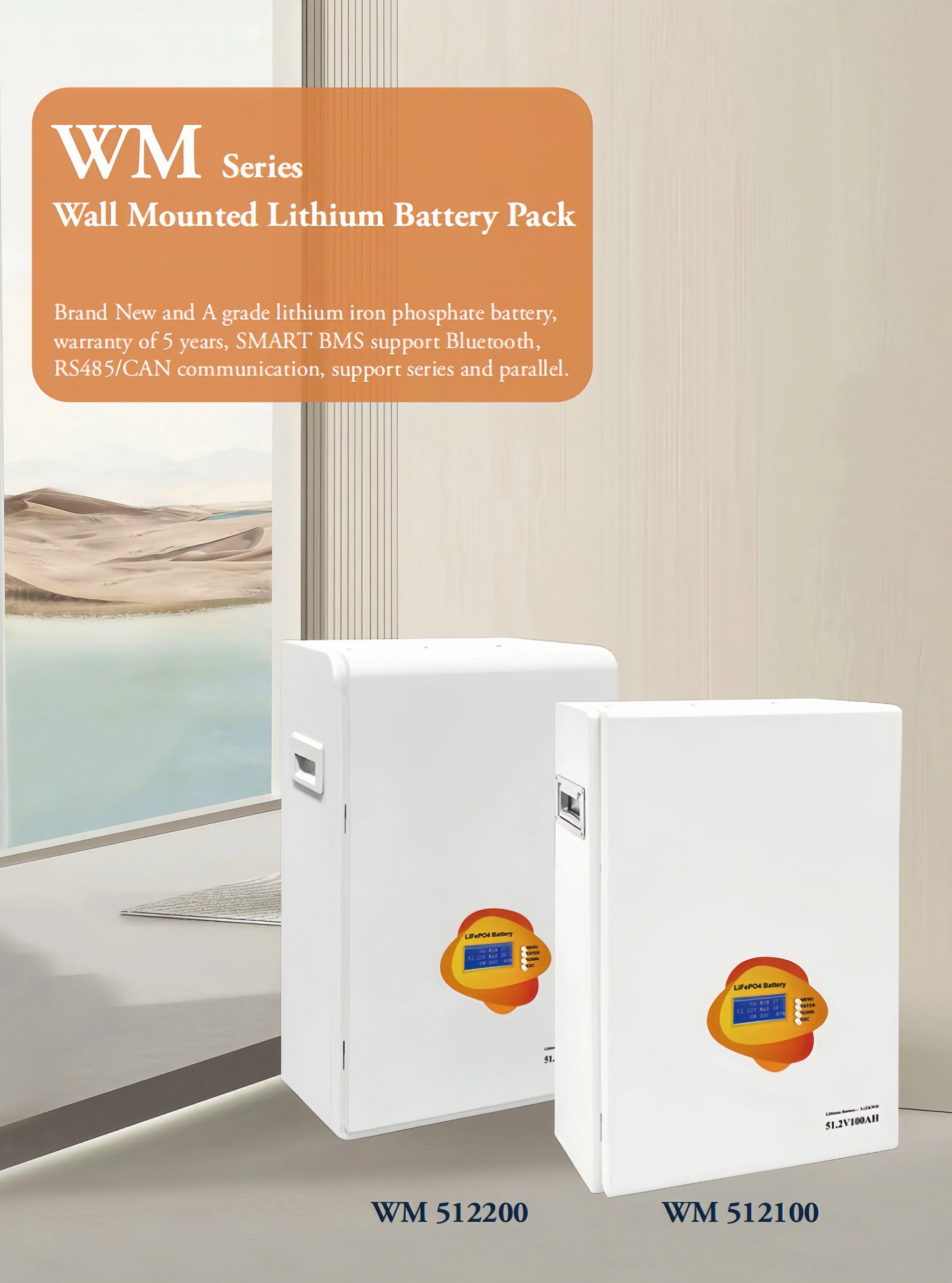
After evaluating technical requirements and selection criteria, one brand consistently demonstrates excellence in integrated solar energy systems. THOE offers household energy storage solutions designed to maintain constant energy supply even during blackouts. These systems store excess solar energy for use when the sun isn’t shining, reducing grid dependence and lowering operational costs. The WM Series 512100/512200 exemplifies this company’s engineering quality, delivering 6000 cycles, a calendar life exceeding 10 years, free-maintenance operation, wall-mounted installation, and a built-in battery status monitor with RS485/CAN communication support. For procurement professionals seeking reliable solar inverters and complete storage ecosystems, this company provides the performance, communication compatibility, and long-term durability required for successful commercial and residential solar projects.