
Maintaining suitable water temperature matters for betta fish, but heating time varies. Tank volume, heater wattage, starting water temperature, room conditions, and the target setting all affect how quickly water warms. Retailers and distributors can use this information to answer customer questions and set realistic expectations.
Clear guidance can reduce service inquiries. Wholesale partners in colder regions should prepare customers for longer heating periods and select products according to tank conditions, not wattage alone.
What Determines Heating Time?

The main factors are water volume, heater power, and the difference between the starting temperature and the target temperature. A small tank may warm faster than a large one under similar conditions, while a colder room can increase heat loss and extend the process. Tank covers, water circulation, and heater placement can also affect performance.
A betta fish heater should be selected using the manufacturer’s recommended tank range and installation instructions. Avoid promising customers a fixed number of minutes or hours unless verified test data is available for that exact model and set of conditions.
Explain Heating Time Without Guesswork
Customer service teams can explain that the heater must raise the water temperature gradually and that the time varies with the aquarium setup. If a customer reports slow heating, staff should first ask for tank volume, current water temperature, target temperature, room temperature, and the heater’s wattage.
Staff should also check whether the heater is installed as instructed and remains fully submerged. If the water temperature does not rise as expected, customers should follow the product manual and contact the seller or supplier rather than repeatedly changing settings or handling a powered heater.
FAQ for Your End Customers
Why is my aquarium taking longer to warm up? A large tank, low room temperature, or a substantial difference between the current and target water temperatures can extend heating time. Check the heater’s recommended tank range and make sure the setup follows the manual.
Should I choose a higher-wattage heater to make warming faster? Not automatically. Wattage must match the tank size and product guidance. A higher rating is not a substitute for checking the recommended capacity, temperature control, and installation requirements.
Can I switch the heater on before placing it in the water? Follow the manufacturer’s instructions. The heater described in the product information must remain fully submerged during operation. Never handle or reposition electrical aquarium equipment while it is powered unless the manual specifically permits it.
Retailers can adapt these answers for product pages, staff training, and customer replies. Consistent wording explains the factors without guaranteeing a heating time for every tank.
Plan Stock for Colder Markets
Wholesale partners selling into cold-climate regions should remind end users that low ambient room temperature can extend heating duration. This is an important consideration when planning sales guidance for markets with seasonal temperature changes.
Distributors can include a heating-time note on product pages, packaging inserts, or sales guidance. Present this as an explanation of heat loss, not a warning that the product is defective. Staff should advise buyers to confirm tank volume and room conditions before choosing a model. Wholesale buyers planning inventory for colder regions can request a custom quote to discuss suitable heater options and order quantities.
Check the Product Details by Model
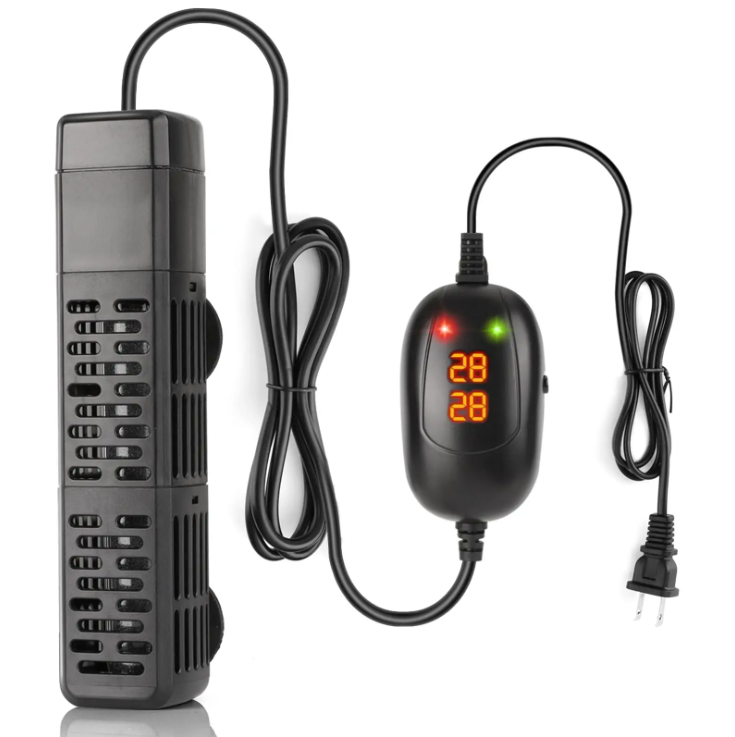
The listed Smart Adjustable Temperature Aquarium Heater range includes 50W, 100W, 200W, 300W, and 500W models. The supplied listing states that the 300W version suits 40–75-gallon tanks and has an adjustable temperature range of 63–94°F (17–34°C). Do not apply those tank-capacity details to other wattages without confirmation.
The product information also describes a two-digit red LED display with Fahrenheit and Celsius settings, over-temperature protection, and automatic power-off when the heater is completely out of water or heats rapidly beyond the set temperature. It uses quartz glass and a heat-resistant ABS guard, with suction cups for mounting. Confirm the details for the exact model before publishing specifications.
Choose a Submersible Heater With Clear Guidance
When evaluating a submersible fish tank heater, buyers should review the recommended tank capacity, wattage, temperature range, installation instructions, and safety functions. Product documents should match the model being ordered and the destination market.
For wholesale buyers planning their product range, HiTauing Supplier provides aquarium heater options for business customers. Buyers should confirm model availability, sample terms, and the specifications applicable to each wattage before planning inventory. Clear product information can help retailers prepare accurate listings and answer common customer questions.
Turn Product Information Into Customer Support
The same information can support after-sales work. If customers understand the limits of wattage guidance and the effect of room temperature, staff can diagnose questions more consistently. Keep approved product specifications and manuals accessible to retail teams and distributors.
A submersible fish tank heater should be recommended according to tank size and the manufacturer’s guidance, rather than a universal heating-time estimate. HiTauing Supplier provides product information that buyers can review when planning their range.
Wholesale buyers can contact us to request a heater product FAQ document for their customer service team. Buyers with specific product requirements, order quantities, or market needs can also request a custom quote to discuss suitable heater options before placing a larger order.