
Global vehicle programs depend on more than assembly capacity. Consistent parts, coordinated engineering, production flexibility, and reliable communication across multiple manufacturing locations can determine how efficiently an automotive supply chain responds to changing demand. Within this environment, automotive manufacturing increasingly involves cooperation across components, power systems, vehicle platforms, and specialized production capabilities. Wuling Motors, a Hong Kong-listed automotive company, operates across these areas and has production bases in China, Indonesia, and India. Its business covers automotive components, vehicle power systems, and commercial vehicles, including new-energy logistics vehicles.

Why Integrated Component Supply Matters
Modern vehicles contain thousands of individual parts, yet their performance depends on how those parts interact. Chassis structures must correspond with suspension geometry, electrical systems need suitable interfaces, and powertrain components have to work within the vehicle’s broader mechanical and electronic architecture.
Supply-chain fragmentation can make these relationships harder to manage. Different suppliers may use separate engineering processes, production standards, testing methods, and communication systems. Coordinating those interfaces becomes especially important when vehicle platforms are modified for different markets or applications.
An integrated supplier model can reduce unnecessary coordination between disconnected manufacturing stages. Rather than viewing each component as an isolated purchase, manufacturers can evaluate how groups of related parts contribute to a complete vehicle system.
Building A Broader Component Portfolio
Component diversity has practical value when it remains connected to actual vehicle requirements. Wuling’s official parts portfolio covers chassis, interior and exterior decoration, stamping and welding, and electronic and electrical systems. Listed products include rear independent suspension assemblies, rear torsion beam suspension assemblies, front and rear subframes, rear axle final drives, integrated bridges, and coaxial powertrain products.
Such breadth illustrates why an automotive components group can participate at multiple points within vehicle development rather than supplying only one category of part. Engineering relationships between neighboring systems can be considered earlier, particularly when several components share packaging or functional constraints.
Production scale also matters for high-volume programs. Wuling states that its automotive-parts business has more than 30 years of manufacturing experience and covers commercial vehicles, passenger cars, and construction machinery, with production capability exceeding 1.5 million sets per year on its official English-language page.
Connecting Engineering With Production
Good supply-chain performance begins before parts reach the factory. Product design, manufacturing feasibility, tooling, material selection, testing, and assembly requirements can influence one another throughout development.
Wuling’s technical capabilities include independent design, analysis, and verification for chassis products, with coverage extending to passenger cars, commercial vehicles, and special vehicles. Its technical center also operates seven professional laboratories covering areas such as vehicle performance and durability, power batteries, motors, EIC joint calibration, electrical performance, chassis, and body development.
Prototype capability provides another useful link between engineering and manufacturing. The company’s trial-production workshop includes body and chassis prototype production, welding, assembly, debugging, tooling development, and inspection. Such facilities can help identify production or integration issues before larger-scale manufacturing begins.
Creating More Resilient Supply Networks
Geographic diversification has become increasingly relevant as manufacturers manage transportation costs, regional demand, trade considerations, and production continuity. Wuling reports production bases in Liuzhou, Qingdao, Chongqing, Jingmen, Nanning, Indonesia, and India, giving its operations a presence across several manufacturing locations.
Multiple sites do not automatically create resilience, however. Effective coordination still depends on common specifications, quality procedures, supplier communication, inventory planning, and the ability to transfer manufacturing knowledge between facilities.
Digital systems can strengthen that coordination by connecting design information, production data, quality records, and procurement requirements. Shared technical documentation also becomes valuable when components are manufactured or assembled in different regions.
From Individual Parts To System-Level Value
The value of an automotive components group is not simply measured by the number of products available. More meaningful indicators include engineering compatibility, production consistency, testing capability, manufacturing scale, and responsiveness to changing vehicle programs.
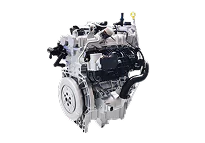
This system perspective becomes even more important as electrification changes the structure of vehicles. Electric platforms require coordination among motors, controllers, batteries, thermal systems, chassis structures, charging equipment, and electronic controls. Wuling’s powertrain portfolio includes motor and electric-control products for EV, HEV, and PHEV systems, alongside conventional and extended-range engine products.
For OEM procurement teams, the practical question is therefore not simply whether one supplier can provide one component. Greater value can come from assessing how engineering, manufacturing, testing, and related component capabilities fit together across an entire vehicle program.
A More Connected Manufacturing Strategy
Strong supply chains are built through relationships between design teams, component producers, vehicle manufacturers, and end-market requirements. Standardized processes help maintain consistency, while regional production and flexible engineering can provide room for adaptation.
The broader direction of automotive manufacturing also points toward closer integration between mechanical, electrical, digital, and new-energy technologies. Suppliers capable of working across these boundaries can become useful development partners rather than functioning only as transactional parts vendors.
Wuling Motors illustrates this broader model through its activities in automotive components, power systems, commercial vehicles, and new-energy applications, supported by manufacturing and engineering facilities across multiple locations. As vehicle architectures become more interconnected, supply-chain strength will increasingly depend on how effectively these capabilities work together.