
For mega-laundries, hospitality service centers, and industrial cleaning facilities, the cost-per-wash is the fundamental metric defining operational health. As throughput increases, the procurement of cleaning chemistry transitions from a routine supply purchase to a strategic financial lever.
The reliance on standard retail-packaged products effectively caps profit margins due to excessive container costs, logistical inefficiencies, and inconsistent batch performance. To capture true economic efficiency, large-scale operations are increasingly shifting toward direct procurement of wholesale bulk liquid laundry detergent.

By bypassing traditional distribution layers and collaborating directly with high-capacity liquid laundry detergent manufacturers, facility managers can secure precise chemical formulations that align with their specific water hardness levels, soil types, and mechanical washing cycles, ultimately protecting their bottom line while ensuring high-standard hygiene outcomes.
The Financial Logic of Bulk Procurement
The primary advantage of purchasing detergent in bulk lies in the compression of the cost-per-wash ratio. When an industrial laundry procures tens of thousands of liters, the savings derived from simplified packaging—transitioning from small consumer bottles to intermediate bulk containers (IBC) or dedicated storage tanks—are substantial.
However, the financial optimization extends beyond the reduction of plastic waste and individual unit handling. Direct procurement from large-scale manufacturing partners allows for the elimination of third-party margins, permitting internal finance teams to allocate funds more effectively toward operational capacity upgrades.
For a facility running at high capacity, the calculation is relatively straightforward. If С represents the total cost of detergent supply per month and W represents the number of wash cycles, the objective is to minimize the ratio R = C/W while keeping the cleaning performance index P above a required threshold.
By utilizing wholesale bulk liquid laundry detergent with optimized active matter content, mega-laundries can achieve better dosing efficiency. A concentrated formula requires less volume per cycle to reach the target concentration of surfactants and enzymes, thereby reducing C without sacrificing P. This shift necessitates a sophisticated understanding of formulation science, which can only be supported through direct technical collaboration with an industrial technology group like Zanyu.
Engineering Formulations for Industrial Hygiene
Commercial laundry environments demand more than generic cleaning power; they require specialized formulations capable of managing heavy protein soils, industrial grease, and the stringent hygiene requirements of medical or hospitality linens.
These facilities must ensure that all laundry items meet high sanitation standards, which often involves the integration of biological agents and antibacterial technologies.
When engaging with experienced liquid laundry detergent manufacturers, procurement directors have the latitude to specify the exact composition of their cleaning agents.
This customization ensures that the chemistry is tailored to the specific infrastructure of the laundry. For instance, formulations can be engineered with varying levels of enzymatic activity—incorporating proteases for proteinaceous stains, amylases for starches, and lipases for fats—to ensure efficient cleaning at the specific temperatures and cycle times utilized by the facility.
Furthermore, by strictly controlling the pH of the bulk liquid, usually within a range of 7.0 to 9.0, formulators protect the structural integrity of synthetic and natural fabric fibers, extending the lifespan of linens and reducing long-term replacement costs. This granular control is impossible to achieve with off-the-shelf retail products, where the chemical composition is designed for average domestic conditions rather than the rigors of industrial-scale cleaning.
Scalability and Infrastructure Reliability
A significant risk in bulk procurement is the stability of the supply chain. Mega-laundries operate on precise schedules; a delay in the delivery of detergent can halt entire production lines, causing cascading financial losses. Reliability in this sector is a function of the manufacturer’s industrial infrastructure.
A facility designed for mass-market output must possess the capacity to process thousands of tons annually, ensuring that even the most substantial wholesale orders can be fulfilled within tight lead times.
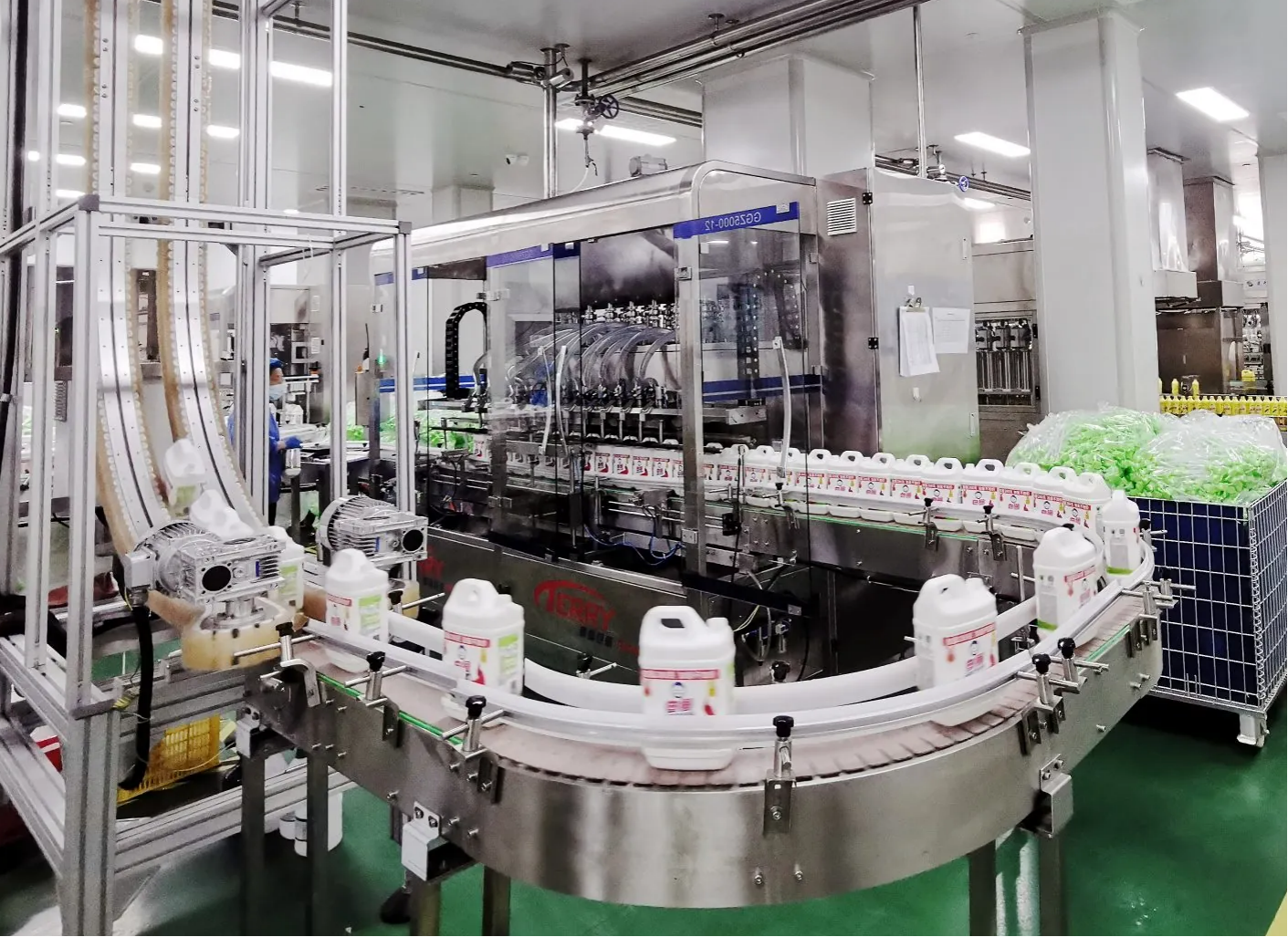
Large-scale partners, such as Zanyu, utilize advanced, numerically controlled liquid batching systems that provide rigorous batch-to-batch consistency. This infrastructure, often integrated with automated filling lines capable of handling diverse packaging formats from 200 kg drums to 1000 kg IBC drum, minimizes the variability that leads to inconsistent cleaning results.
For a facility manager, knowing that every batch of detergent exhibits identical chemical characteristics—down to the precise active matter percentage and viscosity—is essential for maintaining standard operating procedures.
This mechanical precision allows the laundry to optimize its automated dosing systems, preventing detergent waste and ensuring that rinse cycles remain efficient, which also reduces water and energy consumption.
Rigorous Quality Management and Compliance
The final pillar of bulk procurement is the validation of product safety and quality. Commercial laundries, particularly those serving the healthcare sector, must provide documentation demonstrating that their processes and chemicals meet recognized safety standards.
Manufacturing partners who operate under comprehensive institutional oversight provide this necessary compliance support. By aligning with a facility that adheres to international certifications such as ISO9001 for quality management, ISO14001 for environmental management, and ISO45001 for occupational health, the laundry operator effectively offloads the risk of compliance failure.
These manufacturing facilities maintain dedicated physical analysis testing rooms and microbiological laboratories. Before any wholesale shipment leaves the factory, technicians verify that the detergent meets all specifications regarding active surfactant concentration, pH stability, and the absence of trace impurities.
This exhaustive verification process provides a digital paper trail that can be used during routine health inspections or enterprise-level audits. By utilizing a product that is already documented and certified, the laundry operator ensures that their internal compliance reporting is accurate and defensible.
Establishing a Competitive Advantage Through Strategic Sourcing
The transition from purchasing packaged detergents to sourcing wholesale bulk liquid laundry detergent is a critical maturation point for any growing laundry enterprise. This decision requires a shift in procurement strategy, moving toward long-term partnerships with established industrial specialists.
By leveraging the advanced R&D, immense production capacity, and rigorous quality assurance frameworks provided by a partner like Zanyu, mega-laundries can stabilize their operational costs and enhance their hygiene performance.
This collaborative approach allows facility managers to focus their internal resources on logistics, throughput optimization, and guest satisfaction, while leaving the complex technicalities of chemical synthesis and high-volume production to experienced professionals.
Those who integrate these industrial-scale sourcing strategies are well-positioned to maintain their competitive edge, ensuring consistent quality and cost-effectiveness in a market that increasingly rewards operational precision.