
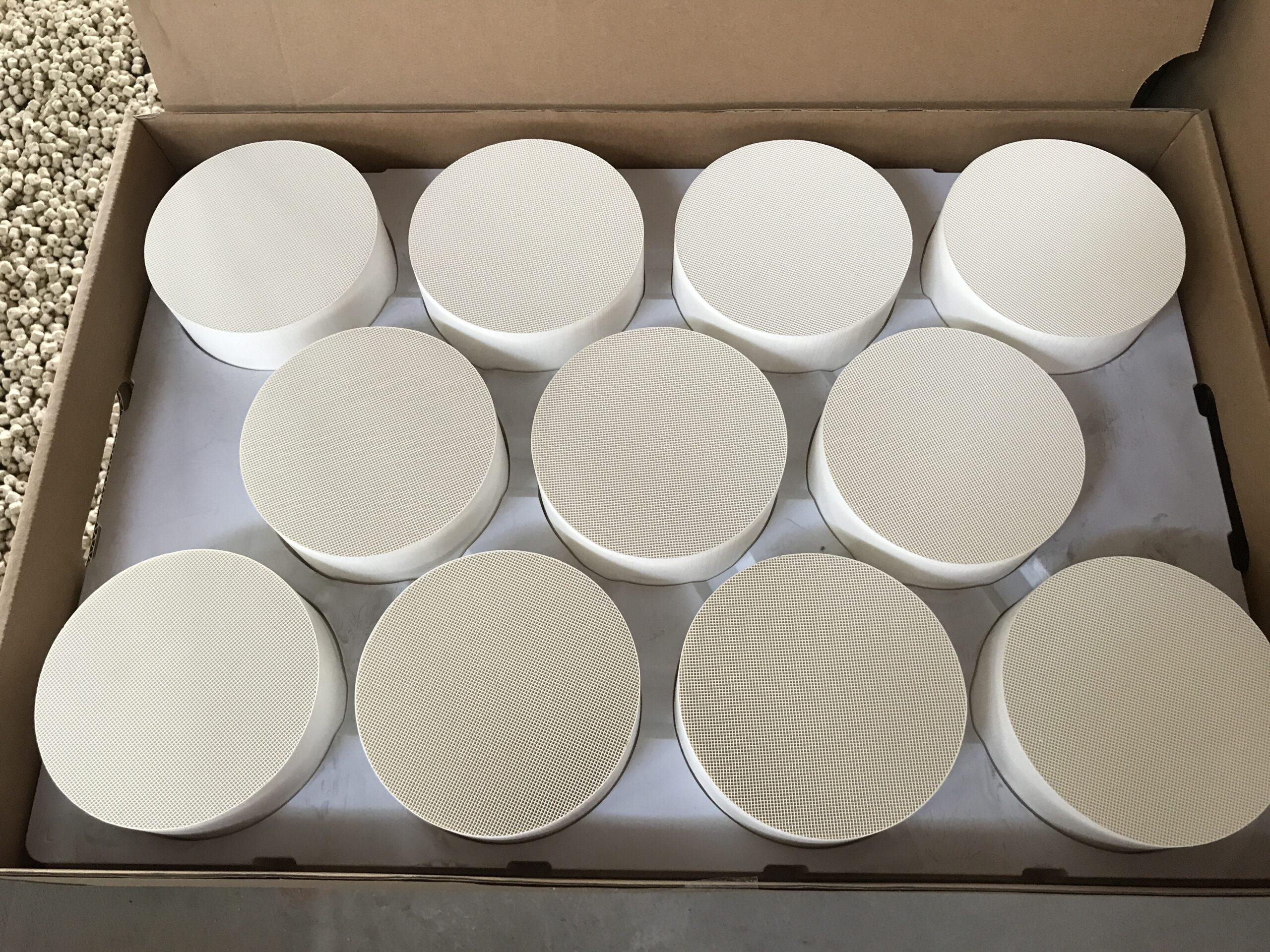
Many modern exhaust aftertreatment systems rely on honeycomb substrates to improve emission control efficiency. Among them, the ceramic catalytic converter is widely used because its cordierite- or SiC-based honeycomb channels provide high thermal resistance and stable flow distribution. Manufacturers adopt this ceramic structure in converters designed for diesel engines, gasoline engines, and non-road machinery, especially where predictable operating temperatures and long duty cycles are required. They integrate these substrates to ensure balanced oxidation performance without adding unnecessary backpressure. In these applications, they focus on durability, uniform coating distribution, and consistent catalytic activity, making the ceramic catalytic converter an effective solution across on-road and industrial sectors.
How Hualian Catalyst Utilizes Ceramic Honeycomb
Emission control suppliers such as Hualian Catalyst incorporate ceramic honeycomb substrates in systems where stable heat resistance is essential. When they develop diesel oxidation converters, they apply platinum- and palladium-based coatings that oxidize CO, HC, and SOF into safer compounds, supporting compliance with Euro III–VI and EPA standards. Their products include the DOC Catalyst-Honeycomb Ceramic Structure, which enhances Effective Emission Reduction by maintaining strong catalytic activity during continuous high-temperature operation. Because ceramic substrates tolerate temperatures exceeding 600°C, they are frequently chosen for heavy-duty engines requiring reliable oxidation without structural deformation. In this context, the ceramic catalytic converter is particularly advantageous for long-haul and high-load engines that benefit from low backpressure and efficient exhaust flow.
Comparing Ceramic and Metallic Converter Uses

While both ceramic and metallic substrates are used in oxidation catalysts, ceramic formats remain common where cost-effectiveness, heat resistance, and stable operating conditions align. A ceramic catalytic converter maintains smooth flow characteristics and allows tailored CPSI configurations, supporting different engine layouts. In contrast, metallic substrates are more suitable for compact spaces or equipment exposed to vibration. By offering both options, suppliers ensure each engine type receives a substrate optimized for its thermal and mechanical needs.
Conclusion
The catalytic converters that use ceramic honeycomb are primarily systems requiring stable thermal performance, predictable operating cycles, and efficient oxidation capability. Ceramic substrates support reliable emission reduction, making them suitable for diesel and gasoline applications. Through balanced flow design, strong coating adhesion, and customizable dimensions, these converters help engines meet regulatory targets while maintaining operational efficiency.